Tag: Growth

  • When the City Limits Move: Annexation Battles and What They Mean for Services

    When the City Limits Move: Annexation Battles and What They Mean for Services

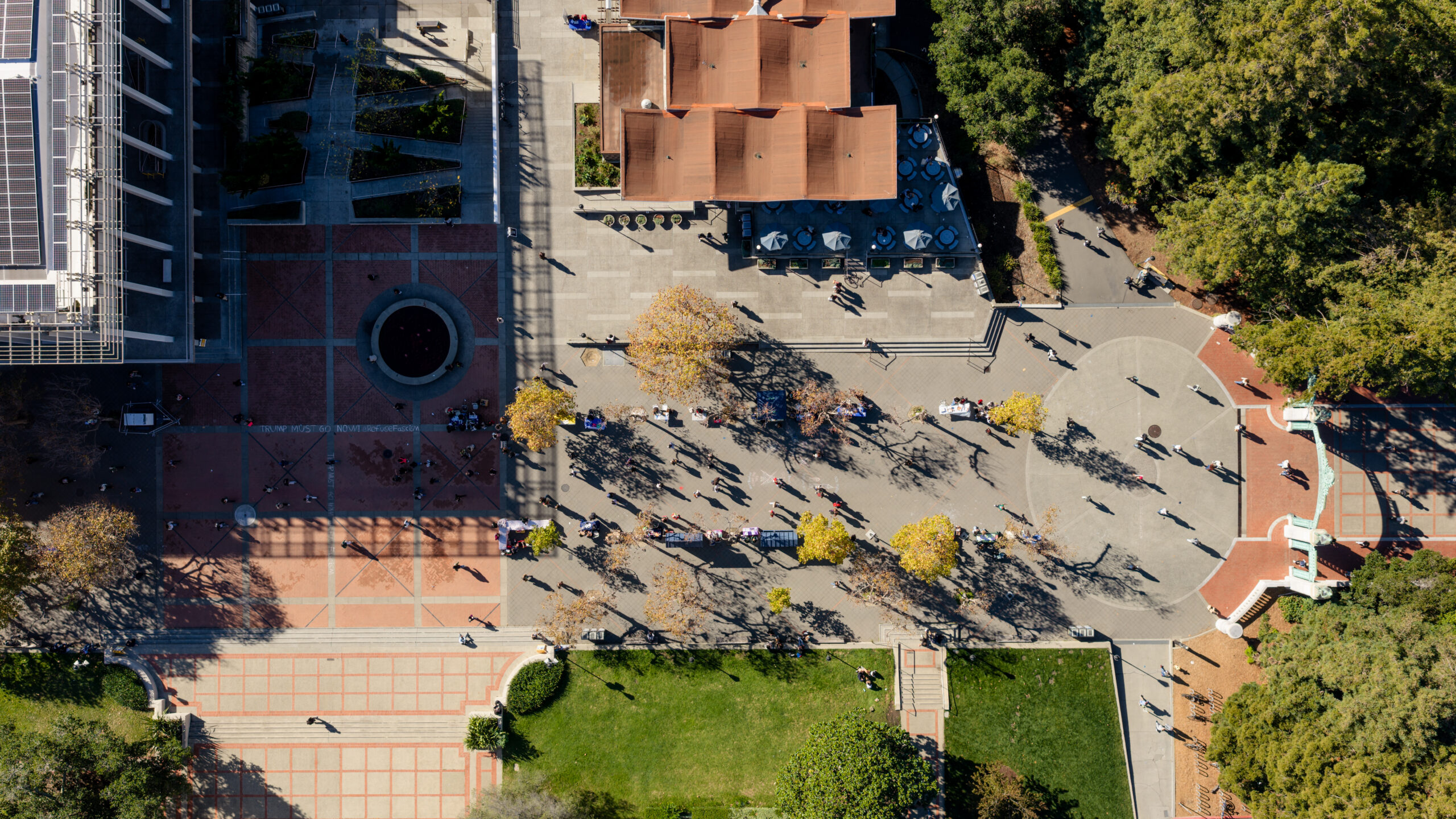
    “Turlock California Aerial” by formulanone, photographed in 2014. Source · CC BY-SA 2.0.

    Civic Commons

    A city can grow around a neighborhood without bringing it inside the city limits. Residents may shop at the same stores, travel the same streets, and identify with the same community as their neighbors. Yet their address can place them under a different government, with different responsibilities for policing, road maintenance, and development.

    Turlock’s unincorporated county islands illustrate that divide. Seven pockets south of East Avenue, surrounded by city territory, encompass approximately 126 acres. They are part of Turlock’s urban landscape, but their incorporation into city government requires decisions about infrastructure, services, and public money.

    Those decisions explain why annexation can become contentious. Moving a boundary changes more than the map. It can redistribute revenue, transfer responsibilities, and give residents a vote in the city government whose decisions already shape their surroundings.

    For California’s growing communities, the central question is whether the proposed arrangement can deliver dependable services—and whether the costs and benefits are being explained honestly.

    Who decides where a city ends?

    California assigns oversight of local government boundary changes to Local Agency Formation Commissions, generally known as LAFCOs. Their responsibilities under the Cortese-Knox-Hertzberg Local Government Reorganization Act include encouraging orderly development, discouraging sprawl, and balancing service needs with the protection of agricultural land and open space.

    A city’s desire to expand does not, by itself, settle the matter. LAFCO provides a separate review of whether the proposed boundary and service arrangement make sense.

    One starting point is the city’s sphere of influence: a planning boundary describing its probable future physical boundaries and service area. Being inside that sphere does not make a property part of the city or guarantee annexation. A proposal outside the adopted sphere generally requires a sphere amendment before annexation can be approved.

    The distinction matters along the Central Valley’s agricultural edges. A planning designation can signal where urban services might eventually extend, while the land remains under county jurisdiction. Residents should distinguish that long-range planning decision from an actual application to change the boundary.

    Proposals also receive scrutiny for their effects on service capacity, neighboring territory, land use, and orderly development. The question extends beyond whether a project can connect to a pipe: it includes whether the agencies involved can serve the resulting community efficiently.

    The service promise must have a budget

    An annexation application must include a plan for providing services. State law requires information about existing and proposed services, their level and range, when they will be available, necessary improvements, and financing. Applications can originate through a public agency’s resolution or a qualifying petition from landowners or registered voters.

    For residents, this is the document that connects the boundary debate to everyday life. Who answers an emergency call? Who repairs the street? When will a promised improvement actually arrive?

    For police protection, residents need to understand how the additional territory fits into staffing and patrol coverage. For fire protection, they need to know who will respond and whether existing stations, equipment, and agreements can support the change. For water and wastewater, the issue is both the availability of connections and the capacity of the larger system.

    A useful plan distinguishes immediate responsibilities from improvements scheduled later. Transferring road maintenance does not automatically rebuild a deteriorated street. Extending city jurisdiction does not mean every household receives a new sewer connection on the effective date.

    Nor does every service necessarily move to a city department. Special districts and contractual arrangements can continue to play a role. Stanislaus LAFCO has documented how city annexations affect rural fire districts, including the loss of district revenue and negotiated transition arrangements. The operational details depend on the particular reorganization.

    This is why a promise of “city services” needs specifics. Residents should be able to identify the provider, the expected service, the start date, and the funding source. A forecast that depends on a future grant should identify that uncertainty. A proposed improvement should not be described as funded simply because it appears on a planning map.

    What annexation does—and does not—do to taxes

    One common misconception is that annexation adds a separate city property-tax rate on top of an existing county rate. California’s basic property-tax system does not work that way.

    The general levy is ordinarily 1 percent of assessed value, distributed among public agencies. Voter-approved debt and applicable charges can add to the bill. Boundary changes can alter how property-tax revenue is allocated; they do not automatically create a second general levy.

    Annexation itself also does not trigger a Proposition 13 reassessment. A home does not acquire a new taxable value simply because the city boundary moves around it. A change of ownership or qualifying new construction is a separate issue.

    That does not mean a household’s costs will remain identical. Depending on the location and adopted arrangements, city taxes, utility rates, service charges, or assessments may change. Residents considering a water or sewer connection need to understand any connection costs and what assistance or financing might be available.

    For a household trying to budget, the useful questions are straightforward: Which charges begin? Which disappear? What will the new monthly bill look like, and what services come with it? Blanket claims that annexation always makes living costs substantially higher—or necessarily lowers them—obscure the decisions residents actually face.

    Behind those household questions is a negotiation between governments over how to divide property-tax revenue. An existing agreement may already set the terms. Where it does not, agencies must work through the exchange under state law, which also provides additional procedures for certain qualifying annexations when negotiations fail to produce an agreement.

    The financial difficulty is that revenue and responsibilities do not necessarily move in equal measure. A county may relinquish some neighborhood responsibilities while continuing countywide functions. A city may acquire infrastructure obligations that extend well beyond the first year’s budget.

    A sound fiscal analysis therefore separates construction costs from continuing operations. A grant can install drainage facilities. Maintaining those facilities requires revenue after the grant is gone. Likewise, development fees and anticipated growth should not substitute for a credible explanation of how recurring services will be supported.

    Residents have a voice, but the rules differ

    Public hearings provide an opportunity to challenge an annexation proposal, question its assumptions, and request changes. Formal protest proceedings can also affect whether an approved proposal advances, goes to an election, or terminates.

    For an ordinary inhabited city annexation subject to those proceedings, valid protests from at least 25 percent but fewer than 50 percent of registered voters trigger an election. A separate landowner threshold can also trigger one: at least 25 percent of landowners owning at least 25 percent of assessed land value. Protests from 50 percent or more of registered voters terminate proceedings. Different rules apply to uninhabited territory.

    County islands introduce an important exception. Under the streamlined process for qualifying islands, LAFCO can be required to approve a city-initiated proposal after notice and hearing and waive formal protest proceedings. Stanislaus LAFCO’s policy expressly recognizes that pathway.

    Eligibility involves statutory conditions, including a 150-acre limit and requirements concerning the island’s boundaries, agricultural status, and benefits from the city. Size alone does not establish eligibility.

    For a family living in a county island, that distinction matters. There may be opportunities to speak at hearings and influence the proposal without a later election on whether annexation should occur. Residents need to know which process applies while the service arrangements and financial terms are still taking shape.

    Turlock’s islands put the questions in focus

    Turlock’s seven islands range from about 1.7 acres to nearly 70 acres. According to the Turlock Journal’s account of the proposed planning effort, their uses are predominantly single-family residential, with some multifamily housing, vacant land, industrial uses, and utilities. Some already receive city water and sewer service.

    That existing connection complicates any simple distinction between being “inside” and “outside.” A neighborhood can depend on city infrastructure while remaining beyond city political boundaries.

    A planning effort outlined by the Stanislaus Council of Governments in October 2025 identified $454,769 for a master plan covering the seven islands. Supported through the state’s Regional Early Action Planning grant program, the work is intended to examine whether annexation is feasible, identify missing infrastructure and services, and determine how these neighborhoods could be integrated into Turlock’s housing, transportation, and utility systems.

    The grant materials set a December 31, 2026, expenditure deadline. For residents, however, a planning deadline should not be confused with an annexation date. Completing the plan would help officials decide what comes next; it would not, on its own, bring the neighborhoods inside the city.

    Some of the physical work needed in these neighborhoods is moving separately. In a November 2026 update, Stanislaus County listed the Kenwood–Starr infrastructure project in the construction phase, with approximately $4.7 million in American Rescue Plan Act funding. The project includes sidewalks, accessible ramps, storm drainage, water facilities, and sanitary sewer improvements.

    For people living along those streets, the improvements have value regardless of when a boundary changes. They can also address deficiencies that complicate a future annexation. But construction and incorporation remain separate decisions: repairing infrastructure does not settle who will maintain it in the years ahead.

    Turlock’s islands show how much must happen between identifying a neighborhood for annexation and delivering the services residents expect. The planning, construction, financing, and transfer of responsibilities must fit together. Otherwise, a community can move from one jurisdiction to another while its most pressing needs remain unresolved.

    The cost of expansion—and the cost of exclusion

    At a city’s outer edge, annexation can raise questions about farmland conversion, housing, and the expense of extending infrastructure. Within an established urban area, the question may instead be how to bring an existing neighborhood into a more coherent system of government.

    Those situations deserve different analysis. Filling a jurisdictional gap within a city is not the same planning choice as extending urban development across agricultural land.

    For existing city residents, concern about financial exposure is reasonable. They need to know whether an expansion would require additional staffing, accelerate infrastructure replacement, or compete with already identified needs. Service commitments should be tested against realistic revenue estimates and slower-growth scenarios.

    But treating every neighborhood solely as a revenue calculation also misses the public purpose of local government. An older community with infrastructure deficiencies may require investment precisely because those needs have accumulated over time. A decision to leave it outside the boundary does not eliminate those needs or their consequences for the surrounding area.

    For island residents, political representation belongs in that calculation. Annexation allows eligible residents to participate in city elections. It does not automatically guarantee faster repairs or greater responsiveness, but it changes their formal relationship with city government.

    An annexation agreement earns public confidence when residents can understand its practical terms: what changes immediately, what improvements still depend on funding, what they will pay, and which agency is responsible when work falls behind.

    Moving the city limits can bring government boundaries closer to the community that already exists. It can also extend obligations faster than agencies can support them. The difference depends on the quality of the planning, the durability of the financing, and whether the promises made before annexation can be measured afterward.

  • From Classroom to Career: Can the Valley Build Its Own Talent Pipeline?

    From Classroom to Career: Can the Valley Build Its Own Talent Pipeline?

    THE HORIZON

    One of the most important questions facing the San Joaquin region is whether it can educate, train, and retain enough skilled people to support the economy it is trying to build. For years the Valley has sent many of its most ambitious graduates elsewhere while importing workers for both technical and labor-intensive roles. As agriculture modernizes, logistics expands, healthcare grows, and new technical fields emerge, that old pattern is becoming harder to sustain.

    Building a stronger local talent pipeline is not simply an education issue. It is an economic development issue, a quality-of-life issue, and a question of whether the region will shape its own future or continue reacting to forces outside its control. Regions that successfully keep more of their own talent tend to compound advantages over time. Those that do not often find themselves competing for workers while watching their most prepared young people leave.

    The Current Gap

    Many students across Stanislaus, San Joaquin, Merced, and nearby counties leave high school with real strengths—work ethic, practical knowledge, familiarity with the local economy, and deep community ties. Too often, however, they lack clear and well-supported pathways into higher-paying careers that exist close to home. As a result, a significant share of high-achieving graduates leave the area for college or work elsewhere, while local employers struggle to fill roles in ag-tech support, precision equipment, logistics coordination, nursing, skilled trades, and related technical fields.

    Community colleges such as Modesto Junior College and San Joaquin Delta College offer affordable, practical programs and have expanded career-focused offerings in recent years. California State University, Stanislaus produces graduates in education, business, nursing, agriculture-related fields, and other areas relevant to the regional economy. Yet completion rates, seamless transfer into further education or employment, local job placement, and long-term retention remain uneven. Too many students begin postsecondary programs but do not finish, or finish and then leave the region because they do not see strong local career trajectories.

    The result is a familiar and costly cycle. The Valley educates talent, exports a large portion of it, and then competes to attract workers from outside when employers need specialized skills. This pattern raises hiring costs and timelines for businesses. It reduces the local tax base and the pool of future civic leaders. It also leaves many young people who would have preferred to stay feeling they have no realistic choice but to go.

    Strengths Already in Place

    The region is not starting from zero. Several important pieces of a stronger system already exist and can be built upon.

    Career and Technical Education programs in many high schools now offer pathways in agriculture mechanics, welding, health sciences, information technology, logistics, and related fields. Some of these programs include industry-recognized certificates and internships or work-based learning with local employers. These experiences give students early exposure to real workplaces and credentials that carry value beyond a diploma.

    Partnerships between school districts, community colleges, and employers have been expanding, though unevenly. In some cases, employers help shape curriculum so that what students learn matches what local industries actually need. Registered apprenticeships in skilled trades and certain technical fields are growing, offering paid experience, mentorship, and clearer ladders into stable careers. These models have particular promise because they combine earning with learning and give employers a direct role in developing their future workforce.

    The region’s demographic profile is another asset. A relatively young and diverse population brings energy, multilingual capacity, and entrepreneurial potential. When education systems treat linguistic and cultural diversity as strengths rather than deficits, those assets can support both individual mobility and regional economic resilience.

    Several districts and colleges have already demonstrated that well-designed career programs can improve engagement, raise completion rates, and connect students to employment. The challenge is not the absence of good examples. It is the need to connect and scale those examples into a more coherent regional system.

    What a Stronger Pipeline Would Look Like

    A more effective talent system by the early 2030s would look noticeably different from today’s fragmented landscape.

    Students would move more smoothly from high school career programs into community college certificates, apprenticeships, or four-year degrees, with fewer dead ends and less loss of credit or momentum. Dual enrollment and early college opportunities would be common rather than exceptional, allowing motivated students to earn meaningful college credit and industry credentials before high school graduation.

    Programs would align more tightly with the region’s actual growth sectors: precision agriculture and equipment technology, logistics and supply-chain operations, healthcare and allied health, advanced manufacturing, construction trades, and the data and technical support roles that cut across these industries. Employers would regularly help design curriculum, provide work-based learning placements, and hire graduates at greater scale.

    Local companies would offer competitive starting wages, structured mentorship, and visible advancement paths so that staying in the region feels like a viable and attractive option. More young people would see practical reasons to build their careers close to home. Adult workers already in the labor force would also have accessible ways to upskill or reskill as technology changes requirements in farming, food processing, warehousing, and related fields.

    In this version of the future, the Valley would still see some talent leave—mobility is normal and often healthy. But it would keep a much larger share of its prepared young people than it does today. Local employers would face less chronic difficulty filling skilled positions, and more families would see a credible future for their children without requiring them to leave the region.

    Barriers That Remain

    Several persistent obstacles continue to slow progress.

    Funding and facilities for modern career-technical education often lag behind industry standards. Updated labs, equipment, and instructional space are expensive, and not every district has the resources to keep pace with rapid changes in technology. Qualified instructors in technical fields remain difficult to recruit and retain, especially when private-sector wages pull experienced workers away from teaching.

    Perception is another significant barrier. Many students, parents, and even some educators still view the Valley as limited in long-term opportunity. That perception, whether fully accurate or not, encourages the most ambitious students to look elsewhere for college and careers. Changing it requires both better local pathways and consistent storytelling about people who have built strong professional lives here.

    Coordination across dozens of school districts, multiple colleges, workforce boards, and employers remains uneven. Fragmented efforts produce pockets of success but limit overall impact. Housing costs in growing parts of the region add another practical barrier, making it harder to retain young professionals even when jobs exist.

    None of these challenges is unique to the San Joaquin region. Together, however, they make the development of a reliable local talent pipeline more difficult and more fragile than it needs to be.

    A Practical Path Forward

    Meaningful progress will require sustained collaboration rather than isolated programs. A regional approach involving school districts, community colleges, universities, major employers, and workforce organizations could align goals, share useful data, and reduce duplication of effort. Clear and public metrics—program completion rates, local job placement, wage outcomes, and retention after several years—would help leaders see what is actually working and where adjustments are needed.

    Targeted investment in updated facilities and equipment is essential. Public-private partnerships focused on modern career centers can accelerate this work and ensure that training environments reflect current industry conditions. Expanding registered apprenticeships and other forms of work-based learning gives students paid experience while giving employers a direct pipeline of prepared hires. These models deserve particular emphasis because they serve both learners and businesses simultaneously.

    Changing the local narrative also matters. Regularly highlighting people who have built solid careers in ag-tech, logistics, healthcare, skilled trades, and entrepreneurship can gradually shift expectations among students and families. Finally, linking workforce housing efforts to major job-creating projects would address one of the practical reasons young workers leave or decline to return.

    These steps are incremental. When pursued consistently across institutions and over multiple years, they compound.

    Why It Matters

    A stronger talent pipeline will help determine whether economic gains from logistics, agricultural technology, healthcare, and related sectors lift longtime residents and their families or primarily benefit people who come from outside the region. It affects the local tax base, the depth of civic leadership, community vitality, and the confidence with which employers can expand.

    The San Joaquin region has adapted before. It built irrigation systems that transformed the landscape, adopted new farming methods across generations, and absorbed successive waves of people seeking opportunity. Creating clearer and more reliable routes from classroom to career is the next practical expression of that long-standing capacity.

    The young people growing up in these communities represent the region’s greatest long-term asset. Giving them realistic reasons and workable pathways to stay, learn, and build their futures close to home is one of the highest-leverage investments the Valley can make. The institutions, employers, and civic leaders who treat this as a shared and sustained priority will do more to shape the region’s next chapter than almost any other single effort.

    The raw materials—students with potential, colleges with capacity, employers with needs, and a regional economy in transition—are already present. The question is whether the region will organize them deliberately and persistently enough to keep more of its talent, and its future, at home.

  • California’s Next Frontier: How the Central Valley Can Lead the State’s Economic Future

    California’s Next Frontier: How the Central Valley Can Lead the State’s Economic Future

    THE HORIZON

    For decades, the story of California’s economy has been told from the coast outward. Silicon Valley, Hollywood, the ports of Los Angeles and the Bay Area — these places have defined the state’s image of innovation, wealth, and global influence. The Central Valley, by contrast, has often been cast as the reliable but secondary engine: the place that grows the food, provides the labor, and absorbs the housing overflow from more expensive coastal metros.

    That narrative is incomplete. And it is beginning to change.

    The San Joaquin region possesses a rare combination of scale, location, productivity, and adaptive capacity that positions it not merely to participate in California’s next economic chapter, but to help lead it. The question is no longer whether the Valley will grow. It is whether the region will seize the opportunity to become a more complete, higher-value, and more self-determined economic force — one that strengthens the entire state rather than remaining in its shadow.

    What follows is not a prediction of inevitable success. It is an examination of the structural advantages the region already holds, the pathways that could turn those advantages into leadership, the realistic vision of what that leadership could look like by the mid-2030s, and the hard requirements that must still be met.

    The Structural Advantages No One Can Ignore

    Several durable realities favor the Valley in ways that are difficult for other regions to replicate.

    Geographic centrality is the most obvious. The Highway 99 and Interstate 5 corridors sit near the midpoint of California’s major population centers. This is not a minor convenience; it is a structural advantage for logistics, distribution, and manufacturing that coastal locations increasingly lack due to congestion, land scarcity, and cost. Goods moving between Northern and Southern California, or between California and the broader western United States, naturally pass through or near the Valley. As companies seek more resilient domestic supply chains, this location becomes more valuable, not less.

    Land and cost structure remain comparatively favorable. Relative to the coast, the Valley still offers available land at prices that allow businesses to expand, experiment, and scale without the extreme capital requirements of Bay Area or Southern California sites. In an era when firms are reevaluating the total cost of doing business — including housing for workers, permitting timelines, and operational flexibility — this difference matters. It does not mean the Valley is inexpensive in absolute terms, but the relative advantage is real and persistent.

    Agricultural depth and know-how form another foundational asset. The region remains one of the most productive agricultural landscapes on Earth, responsible for a disproportionate share of the nation’s fruits, nuts, vegetables, and dairy. That expertise — in water management, crop systems, food processing, soil science, and increasingly precision technology — is a platform for higher-value innovation rather than a limitation. Few places combine this depth of practical knowledge with the scale needed to test and deploy new systems at meaningful volume.

    Demographic energy adds further potential. A younger, growing population provides both workforce and entrepreneurial capacity. The challenge has long been retaining that talent rather than exporting it to coastal job markets. Regions that successfully keep more of their ambitious young people tend to compound advantages over time. The Valley has the raw demographic material; converting it into sustained local capacity remains one of its highest-leverage opportunities.

    These are not temporary trends driven by a single policy cycle or market boom. They are structural features that become more valuable as coastal costs continue to rise, global supply chains reconfigure, and the demand for reliable domestic production grows.

    A Leadership Model Built on the Valley’s Own Strengths

    Leadership does not require the Valley to become a second Silicon Valley or a replica of coastal innovation hubs. Attempting to copy those models would likely fail and would miss the region’s distinctive advantages. True leadership requires the Valley to do what it has always done well — produce, adapt, and build — at a higher level of sophistication and with broader impact.

    Four interlocking pathways stand out as the most realistic routes to that outcome.

    First is advanced food systems and agricultural innovation. The Valley can move from being primarily a supplier of raw commodities to a center of precision agriculture, sustainable intensification, and food-system technology. Sensors, robotics, data analytics, variable-rate application, and improved genetics are already changing practices on progressive farms and orchards. The region’s scale makes it an ideal testing and deployment ground for these tools. Success would raise productivity per acre even under tighter water constraints, create higher-skill technical jobs tied directly to the land, and position the Valley as a source of solutions rather than only products. The knowledge developed here — in managing water under scarcity, integrating technology into complex permanent-crop systems, and maintaining output under regulatory pressure — has value far beyond California’s borders.

    Second is inland logistics and advanced distribution. As e-commerce volumes grow and companies pursue nearshoring strategies, the Valley’s location and land availability make it a natural inland hub. Expanded capacity at Stockton’s port, stronger intermodal rail connections, and modern fulfillment and cold-storage facilities can turn the 99 and I-5 corridors into one of California’s primary distribution backbones. This is not limited to low-skill warehouse work. It includes cold-chain logistics for perishable goods, packaging innovation, inventory optimization, and supply-chain coordination that support both agriculture and broader manufacturing. Regions that successfully capture these functions tend to generate significant secondary employment and tax base growth.

    Third is practical energy and resource solutions. Abundant solar potential, existing canal networks, and agricultural land create opportunities for agrivoltaics (solar installations that coexist with farming), bioenergy from agricultural residues, and more efficient water management systems. Expertise developed under the Sustainable Groundwater Management Act and through long-standing local irrigation districts can become exportable knowledge. The Valley’s multi-decade experience with water scarcity and infrastructure gives it credibility on solutions that other arid and semi-arid regions will eventually need. Turning that experience into practical models — rather than simply enduring the constraints — is a form of leadership.

    Fourth is stronger talent and education pathways. A more effective local pipeline — from high school career-technical programs through community colleges and regional universities into well-paying technical and professional roles — would reduce the brain drain that has long limited the region’s potential. Partnerships that align education with the actual needs of ag-tech, logistics, healthcare, advanced manufacturing, and skilled trades would keep more ambition and capacity close to home. Regions that succeed at this tend to create virtuous cycles: better local opportunities attract and retain talent, which in turn supports higher-value economic activity.

    Together, these pathways form a model of balanced growth: rooted in production, elevated by technology, oriented toward resilience, and capable of generating broader prosperity rather than concentrating gains in a narrow set of industries or locations.

    What Leadership Would Look Like by the Mid-2030s

    In a successful scenario, the San Joaquin region would look noticeably different by the middle of the next decade — not unrecognizable, but more dynamic and more self-sustaining.

    It would generate a larger share of California’s total economic output relative to its population. Logistics, advanced agriculture, food processing, and related technical services would form a more substantial and higher-wage share of the regional economy. Agricultural output value could still grow even if total irrigated acreage moderated, driven by productivity gains and continued shifts toward higher-value crops and systems.

    The region would lead the state in certain categories of job creation — particularly in logistics, precision agriculture support, and technical roles tied to food systems and distribution. Downtowns in places like Modesto, Stockton, and Turlock would show more signs of revitalization and mixed-use activity. Local universities and colleges would be known regionally, and in some specialties nationally, for programs connected to the Valley’s economic strengths.

    More of the region’s own talent would stay. Young people would see clearer pathways to solid careers without needing to leave for the coast. Employers would find it easier to recruit and retain skilled workers locally. The Valley would begin exporting practical solutions — in water management under scarcity, food-system technology, and inland logistics models — rather than primarily exporting raw commodities and surplus labor.

    This version of leadership would benefit the entire state. It would relieve some pressure on coastal housing markets and infrastructure. It would strengthen California’s food security and supply-chain resilience. And it would demonstrate that the state’s economic future need not be confined to a narrow coastal band of high-cost, high-congestion metro areas.

    The Hard Requirements

    None of this is automatic or guaranteed. The region faces real and persistent constraints that must be managed deliberately.

    Water reliability remains the most fundamental. The long-term effects of the Sustainable Groundwater Management Act, combined with more variable precipitation patterns, will force difficult choices about land use, crop selection, and infrastructure investment. Regions that treat water as a strategic asset to be managed with both efficiency and foresight will be better positioned than those that treat it primarily as a constraint to be endured.

    Housing affordability can undercut the Valley’s cost advantage if prices continue to rise faster than local wages. Without adequate production of attainable housing near job centers, the region risks importing the same cost-of-living pressures that have limited coastal growth.

    Infrastructure must keep pace with expansion. Roads, water systems, broadband, and public services that lag behind growth degrade quality of life and eventually limit economic potential. Coordinated investment is essential.

    Education and workforce systems still leave too many young people without clear local pathways into higher-skill roles. Closing that gap requires sustained partnership between schools, colleges, employers, and civic institutions rather than isolated programs.

    Political fragmentation sometimes prioritizes short-term or narrowly local interests over regional strategy. Leadership at the scale described here requires a greater degree of cross-county cooperation and longer time horizons than has often been the norm.

    Progress depends on deliberate choices: coordinated planning across jurisdictional lines, balanced land-use policies that protect the most productive farmland while allowing smart expansion in appropriate locations, sustained investment in training and infrastructure, and civic leadership that treats the Valley’s long-term competitive position as a strategic priority rather than an afterthought.

    The Deeper Stakes

    The Central Valley has rewritten its own story before. It turned arid plains into one of the world’s most productive agricultural regions through collective engineering, institutional innovation, and determination. It absorbed successive waves of people seeking opportunity — from early settlers and Gold Rush migrants to Dust Bowl refugees, immigrant farm families, and more recent arrivals — and built towns, irrigation districts, colleges, and communities that still shape daily life. The next chapter is not about abandoning that history. It is about extending it into a new economic context.

    A Valley that leads would still grow food. It would also generate more of the technology, logistics capacity, resource-management expertise, and practical innovation that a changing California and a more uncertain world will need. It would offer a model of growth that is productive rather than purely speculative, grounded rather than purely coastal, and oriented toward resilience rather than extraction.

    California’s economic story has room for more than one center of gravity. The concentration of high-value activity along the coast has produced extraordinary wealth and innovation, but it has also produced extreme costs, congestion, and geographic imbalance. A stronger Valley would help correct that imbalance without diminishing the coast’s strengths.

    The San Joaquin region has the scale, the location, the productive base, and the adaptive history to claim a larger share of California’s economic future. Whether it does so depends less on distant policymakers in Sacramento or Washington than on the decisions made in boardrooms, classrooms, city halls, irrigation district offices, and farm fields across the Valley in the years immediately ahead.

    The opportunity is real. The structural advantages are already present. The question is whether the region will organize itself to claim the leadership role that those advantages make possible.

    The next decade will largely answer that question.

  • Growth Along Highway 99: Why the Valley Is Expanding Now

    Growth Along Highway 99: Why the Valley Is Expanding Now

    THE HORIZON

    Highway 99 has always mattered. It linked farm towns, carried freight, tied cities together, and gave shape to everyday movement through the San Joaquin Valley long before the language of “growth corridors” became common in planning documents. For decades, though, it was often treated as the secondary route — slower than Interstate 5, more local, more agricultural, more associated with the ordinary work of inland California than with the state’s future.

    That is no longer an adequate way to understand it.

    Today, Highway 99 is one of the clearest physical expressions of where the Valley is changing fastest. Drive the corridor from Stockton through Modesto and Turlock toward Merced and beyond, and the evidence is difficult to miss. New subdivisions push outward at the edges of older communities. Industrial buildings rise near major interchanges. Commercial strips extend into places that not long ago felt peripheral. Traffic thickens. School districts plan for growth. Utilities strain. Farmland meets warehouses, rooftops, truck traffic, and speculation.

    What was once described as a route through the region is becoming one of the main ways the region is being remade.

    That is what makes Highway 99 so important right now. It is not merely carrying growth. It is organizing it.

    To understand why the Valley is expanding now, it helps to stop thinking of Highway 99 as just a road. It is better understood as a spine: a corridor where housing demand, inland migration, logistics expansion, local planning, and land-use pressure are converging into one of the most consequential development stories in California.

    The Corridor Is No Longer Just Passing Through

    For much of the twentieth century, the Valley was often described as a place people crossed on the way to somewhere else. The cultural assumption was simple enough: the coast was destination, the interior was passage. People farmed here, worked here, shipped from here, but the state’s prestige and aspiration lived elsewhere.

    That story no longer fits what is happening along 99.

    Over the past decade, and especially since the middle of the 2010s, the corridor has become more than a through-route. It has become a destination for households, employers, developers, and investors looking for space, access, and relative affordability. The acceleration that followed the pandemic only made the pattern more visible. As housing costs on the coast climbed further and remote or hybrid work altered location decisions for some households, the communities along 99 began absorbing a larger share of people who once might have remained in the Bay Area or Southern California.

    That does not mean everyone arriving is wealthy, or that all growth comes from outside. It means the corridor has entered a new phase in which internal California migration, natural population increase, and employer location strategies are reinforcing one another. Places like Stockton, Modesto, and Turlock are no longer simply adjacent to regional growth. They are inside it.

    That change matters because settlement patterns tend to follow infrastructure. Once enough households, businesses, and public agencies begin treating a corridor as a place to build rather than merely a place to traverse, the built environment starts changing quickly.

    That is exactly what has been happening.

    Why the Growth Is Happening Here

    Several forces are driving expansion along Highway 99, and none of them works in isolation.

    The first is relative affordability. Even after recent price escalation, communities in this part of the Valley still tend to offer lower housing costs than the Bay Area or much of coastal California. That difference remains powerful enough to pull households inland, especially families looking for more space, workers willing to commute farther, or buyers carrying equity from more expensive markets. Affordability is no longer what it once was, but the gap still exists, and it continues to shape movement.

    The second force is logistics. Highway 99 runs through one of the most economically strategic inland stretches in the state. It connects to other major freight routes, rail systems, ports, and growing industrial zones. That makes it especially attractive for warehousing, distribution, trucking, and related industrial activity. The rise of e-commerce intensified this advantage, but the underlying logic predates that shift. A corridor that already moved goods efficiently became even more valuable once the economy demanded faster and more flexible fulfillment networks.

    The third force is agricultural evolution. The Valley is not abandoning agriculture, but agriculture itself has become more technically layered, more capital-intensive, and more closely tied to processing, data, water management, and supply-chain infrastructure. That has created jobs not just in the field, but around the field — in food processing, logistics, equipment, engineering, maintenance, and agricultural technology. Growth along 99 reflects not the disappearance of farming, but the growth of the systems clustered around it.

    A fourth force is commuting and remote work. The road network linking the Valley to the Bay Area and to inland employment centers has long mattered, but it matters differently now. Some households continue to make long commutes through the Altamont and related corridors. Others no longer commute every day, which changes the cost-benefit calculation of living farther out. In both cases, Highway 99 sits inside the decision.

    Together, these pressures make the 99 corridor one of the most logical places for expansion in the state.

    What the Growth Looks Like on the Ground

    Growth becomes most legible when it changes the feel of the landscape.

    Along Highway 99, those changes are visible in different forms depending on where one is looking. At the edges of cities, subdivisions reach into land that was recently orchard, row crop, or other agricultural use. Near major exits and transport nodes, industrial buildings rise with a scale that would have felt unfamiliar a generation ago. Retail follows rooftops. Service businesses follow population. School districts revise enrollment expectations. Municipalities confront new infrastructure demands faster than older systems were designed to absorb them.

    The visual effect can be jarring because the corridor remains recognizably agricultural even while it urbanizes.

    That juxtaposition is one of the defining features of the growth now underway. A distribution center may sit within view of active farmland. New tract housing may edge up against orchard rows. A city that still sees itself as modest or semi-rural may suddenly find itself managing traffic counts, development patterns, and land pressures that belong to a much larger growth cycle.

    This is why local arguments about the corridor are often so intense. The change is not theoretical. It is visible from the road.

    For longtime residents, the issue is not simply that new buildings are appearing. It is that the older boundary between town and working landscape is becoming harder to maintain. The corridor is thickening physically, and with that comes a sense that the Valley is entering a new chapter whether everyone is ready for it or not.

    Warehouses, Rooflines, and the New Employment Map

    One of the clearest signs of the corridor’s transformation is the rise of industrial development.

    Large warehouse and distribution facilities have become some of the most visible new structures along and near 99. Their scale can make them feel like an abrupt break from the older Valley landscape, but in another sense they are part of a long regional pattern. The Valley has always depended on movement. What is changing is the form that movement now takes.

    The region once moved grain, then refrigerated produce, then increasingly processed agricultural goods. Today it also moves parcels, packaged goods, industrial supplies, and the enormous volume associated with regional and national distribution chains. Warehouses are not replacing the productive function of the Valley so much as extending it into a newer logistical era.

    Still, they change the employment map.

    Industrial growth creates jobs in trucking, shipping, maintenance, inventory systems, security, site management, and last-mile distribution. It also raises harder questions. Are these the kinds of jobs that create long-term local prosperity? Do they generate enough tax base to justify land conversion and infrastructure strain? Do they crowd out housing or productive farmland? Do they intensify air quality and traffic problems faster than local governments can manage them?

    These are not side questions. They are central to how communities along the corridor will judge the growth now arriving.

    The 99 corridor is expanding not only in population, but in economic identity. Whether that identity becomes more balanced or more dependent on land-intensive logistics will depend on decisions being made right now.

    Growth Has Benefits. It Also Sends the Bill Later.

    There are obvious advantages to expansion along Highway 99.

    More residents can support a broader business base. More rooftops can justify new retail and services. More industrial activity can generate jobs and local revenue. A larger and more dynamic corridor can attract investment, increase visibility, and diversify a region long seen too narrowly through agriculture alone.

    But growth is never free.

    New housing requires roads, drainage, sewer capacity, schools, police coverage, fire response, and long-term maintenance. New industrial development brings truck trips, wear on infrastructure, land-use conflict, and environmental pressure. Population growth can expand opportunity while also driving congestion, school overcrowding, and water demand. A community can become more economically active and more strained at the same time.

    This is one of the core truths of corridor growth: the benefits are visible early, while many of the costs arrive later and stay longer.

    That is why local governments spend so much time on specific plans, development agreements, impact fees, circulation studies, and general plan updates. Residents often experience these as bureaucratic delay. But at root they are attempts — not always successful — to answer a basic question: how much growth can a corridor absorb before the systems beneath it begin to fail?

    That question becomes harder, not easier, in a place where farmland, freight, housing, and public services all compete for the same physical and fiscal space.

    Farmland, Identity, and the Uneasy Edge

    Perhaps the deepest tension running through 99 growth is the one between expansion and agricultural identity.

    The Valley is not simply an empty inland zone waiting to be filled. It is already a working landscape. That means every subdivision approved at the edge of town and every industrial tract converted from production raises a larger issue: how much of the region’s agricultural base can be consumed by growth before the thing drawing people here starts to weaken?

    This is not only a question of acreage. It is a question of identity.

    Many communities along the corridor still understand themselves through farming, open space, and a certain kind of inland practicality. Even residents who do not work in agriculture often expect the surrounding landscape to retain that identity. At the same time, those same communities face rising housing demand, economic pressure to expand the tax base, and state-level expectations around production of new homes.

    That is why growth politics along 99 are so difficult. They involve real trade-offs, not simply nostalgic resistance or developer enthusiasm. Build too slowly and affordability worsens, job growth may bypass the region, and crowding pressure intensifies elsewhere. Build too quickly or carelessly and communities lose productive land, overload infrastructure, and drift toward a form of growth that feels less like local maturation than external spillover.

    The challenge is not whether the corridor will grow. It already is. The challenge is whether growth can be shaped in a way that enlarges the region without hollowing out what makes it distinct.

    What Happens Next

    The next decade will likely make Highway 99 even more important.

    Transportation investment, interchange upgrades, rail improvements, freight planning, and continued demographic pressure will keep pushing attention toward the corridor. The communities along it will continue to attract residents priced out elsewhere, industries looking for space and connectivity, and local families seeking the same thing Valley households have long sought: a workable life in a place that still seems more reachable than much of California.

    That trajectory, however, is not self-managing.

    Cities and counties will need to decide where growth belongs, what infrastructure should come first, how to preserve the most valuable agricultural land, and how to prevent the corridor from becoming a chain of disconnected subdivisions and oversized industrial pads lacking civic coherence. Schools, utilities, and local budgets will all be pulled into those decisions. So will voters.

    The outcome will not be determined by one big choice. It will be determined incrementally — by plan amendments, site approvals, fee structures, road projects, annexation decisions, housing debates, and industrial entitlements that, taken together, will decide whether 99 becomes a stronger version of the Valley or a weaker imitation of the overburdened growth patterns elsewhere.

    Why This Corridor Matters So Much

    Highway 99 now tells one of the clearest stories about where the Valley is headed.

    It shows where people are arriving, where land is being converted, where employers are betting, where public infrastructure is straining, and where local government will be tested most intensely in the years ahead. It is no longer simply the old inland route beside fields and towns. It is one of the main development spines of California.

    That is why understanding 99 matters.

    The corridor explains rising home prices, industrial expansion, school pressure, traffic frustration, farmland loss, and the sense — increasingly common in places like Turlock and Modesto — that growth is no longer somewhere else’s story. It is here. It is local. And it is moving fast enough that old assumptions about what the Valley is may not hold much longer without deliberate effort.

    The future of the San Joaquin Valley will not be decided along Highway 99 alone. But much of it will be visible there first.

    The road that once mainly connected communities is now helping remake them.