Bankruptcies, changing demand and consolidation are reshaping an industry that connects the area’s farms, factories and livelihoods.
THE HORIZON
Dole Packaged Foods’ planned shutdown in the Atwater area adds another major employer to a succession of food-processing closure decisions across the Central Interior. Its November 17 notice to California lists 404 affected employees and a January 20, 2027 effective date. That filing joins closure announcements involving Foster Farms’ fresh-turkey operations in Turlock, Del Monte’s Modesto and Hughson facilities, and FreshRealm’s Tracy operation. WARN Index
Together, those decisions raise a consequential question for an area where agricultural production and manufacturing are closely connected: what is happening to the businesses that turn food into products sold well beyond the farm?
The public record points to several overlapping forces. Corporate financial distress, changes in product demand and decisions to concentrate production have each played a role. At the same time, some manufacturing is moving into the area. Understanding the change requires examining the individual businesses alongside the employment base they collectively support.
Caliture’s analysis of federal employment records shows that private food-manufacturing employment in Stanislaus, San Joaquin and Merced counties averaged 22,844 jobs in 2025, down from 23,562 in 2024. That was a decline of 718 jobs, or about 3%.
| County | Average jobs, 2024 | Average jobs, 2025 | Change |
|---|---|---|---|
| Stanislaus | 10,906 | 10,792 | −1.0% |
| San Joaquin | 6,171 | 6,026 | −2.3% |
| Merced | 6,485 | 6,026 | −7.1% |
| Three-county total | 23,562 | 22,844 | −3.0% |
Source: Caliture calculations from BLS Quarterly Census of Employment and Wages annual files for Stanislaus, San Joaquin and Merced. Figures cover private food manufacturing and represent annual average payroll jobs, rather than individual workers.
Those figures establish a decline before the major 2026 closure notices. They also show the scale of the industry that remains: the three counties’ food manufacturers paid approximately $1.58 billion in wages during 2025. The figures exclude farming itself and beverage manufacturing, including wineries. They cannot measure the full effect of shutdowns occurring after that year. bls.gov
The recent decisions differ in ways that matter for explaining what comes next.
Foster Farms attributed its Turlock fresh-turkey shutdown to changing market demand. The company announced that more than 500 positions would be affected, with operations scheduled to end May 9, 2025. The decision covered fresh-turkey processing and associated operations while retaining its fully cooked poultry facility in Turlock. The company also said affected employees could seek available positions at other facilities. MEAT+POULTRY
That distinction illustrates how a company can remain an important local employer while withdrawing from a particular product line. Continued demand for food in general provides no guarantee that every form of food production will remain viable at every plant.
Del Monte’s shutdown emerged from a different corporate process. The company entered Chapter 11 in July 2025, announcing a lender-supported restructuring and sale intended to improve its financial position and bring in new ownership. In January 2026, it said the business emerging from the sale would no longer need the Modesto plant’s processing capacity. prnewswire.com
Its initial state notices named 765 positions in Modesto and 11 in Hughson, with separations beginning April 7. Subsequent correspondence described additional departures in stages. Those documents demonstrate why a single closure date or headline workforce estimate may capture only part of a prolonged shutdown. edd.ca.gov
The sale process also separated the future of a familiar brand from the future of a particular factory. Lodi-based Pacific Coast Producers announced court approval in February for its purchase of canned-fruit and fruit-cup inventory, together with rights to license and use Del Monte and S&W brands for shelf-stable fruit. Preserving that commercial business did not require preserving the Modesto production site. Pacific Coast Producers
FreshRealm brought another set of circumstances. Its April 27, 2026 permanent-closure notice named 228 employees at its Tracy facility, with a June 27 effective date. That same day, the company announced Chapter 11 proceedings and attributed damage to its operations and finances to a significant disruption in ingredient supplies during 2025. edd.ca.gov
FreshRealm also announced an agreement, subject to court approval, under which Blue Apron would leave its commercial arrangement with the company and transition related operations to a new structure. Its account connected the restructuring to a supply interruption and changing business relationships. Those are different pressures from Foster Farms’ stated adjustment to turkey demand. prnewswire.com
For Dole, SFGATE reported that the company described its decision as an effort to simplify its supply chain and strengthen long-term competitiveness. That explanation identifies a corporate objective, while leaving the relative contribution of individual operating costs unclear. sfgate.com
These accounts support a picture of an industry undergoing several forms of adjustment at once. A plant may lose its place within a company’s production network, become caught in a financial restructuring, or serve a product category whose demand has changed. Each route can produce a local shutdown, even though the underlying problems call for different responses.
The consequences can extend well beyond the factory’s employees. Del Monte’s closure provides a particularly clear example because it affected the market for fruit from orchards planted years earlier.
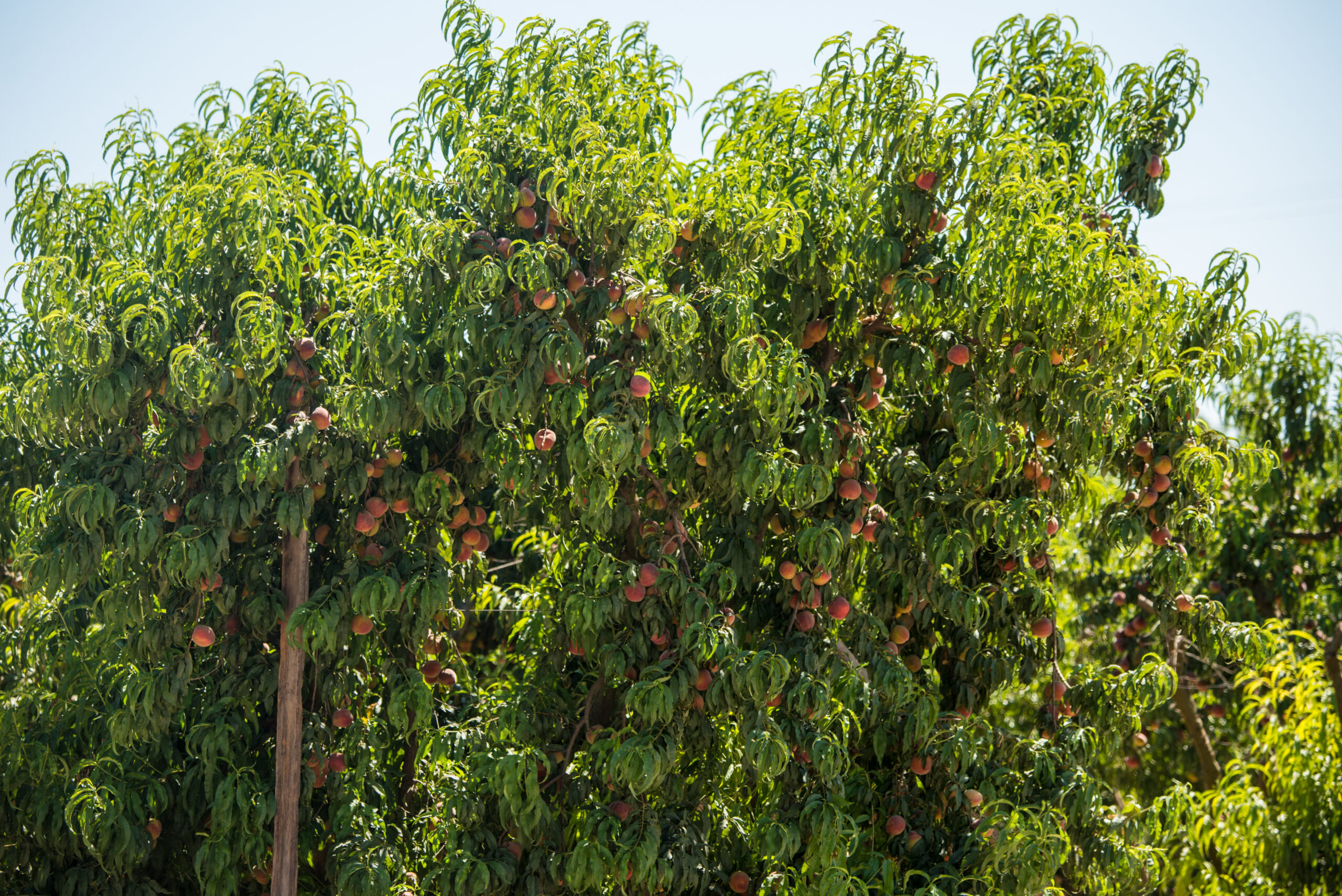
In its July 2026 analysis of the clingstone peach industry, the U.S. Department of Agriculture described a sector facing weaker demand, increased imports and higher production costs. It said Del Monte’s rejection of peach contracts for 2026 and later years left more than 5,600 acres statewide without processor contracts or viable alternative market outlets. federalregister.gov
The geography of that impact reaches beyond the Central Interior, but the local connection is direct. In January, Ag Alert reported on San Joaquin County grower Richard Lial, who had planted a young peach orchard under a long-term Del Monte contract. His situation illustrated the exposure created when a farmer’s investment in a crop outlasts the business arrangement supporting it. www.agalert.com
An orchard cannot adjust on the same timetable as a company purchasing decision. USDA’s analysis noted that clingstone peach trees take roughly three years to reach commercial production and that growers had planted new acreage under long-term processor contracts. The financial commitment begins well before a farmer receives a marketable harvest. federalregister.gov
USDA subsequently established a program providing up to $9 million for voluntary clingstone peach-tree removal. The purpose was to bring production into closer alignment with the reduced market and help growers transition their land to other commodities. The funding represented assistance with adjustment; it could not recreate the lost processing business. Agricultural Marketing Service
Pacific Coast Producers offered one avenue for retaining part of that market. In its February announcement, the grower-owned cooperative said it intended to buy more fruit and expand its capacity to meet demand following the Del Monte transaction. The extent of that replacement business matters to growers deciding whether to maintain orchards, change crops or leave particular acreage unharvested. Pacific Coast Producers
The same underlying relationship applies to the wider food economy: agricultural output has greater commercial value when businesses have reliable ways to process and sell it. Losing a buyer can force changes in what a farm produces, while changes in farm production can alter the economics of the next processing plant.
Yet the Central Interior is also receiving production through consolidation.
Blue Diamond Growers announced in June 2025 that it would move most of its Sacramento manufacturing to its existing Salida and Turlock facilities. The cooperative attributed the decision to the expense and inefficiency of operating within its historic Sacramento buildings. media.bluediamond.com
By the September–October 2026 issue of its company magazine, Blue Diamond was describing consolidation into Salida and Turlock and reporting savings from the changes. That is evidence that the area’s plants can attract additional production even as other businesses withdraw. The account does not establish how many additional local jobs resulted. online.flippingbook.com
This creates different outcomes within the same area. A company can reduce its total factory footprint while increasing the importance of a surviving local facility. Growers may retain a market through a different processor, while workers at the former plant face a separate employment transition.
For households, the quality of that transition matters as much as the existence of another job. A replacement position’s pay, benefits, schedule and commuting requirements determine how much of the previous livelihood it restores. For communities, retaining some food manufacturing elsewhere in the area can preserve economic activity while leaving an individual neighborhood or city with a vacant industrial site.
The notices themselves provide only a partial view of those outcomes. They record anticipated employment actions. They do not establish how many people subsequently transferred, retired or found comparable work. Seasonal employment and departures spread across several notices also make a combined headline total a poor measure of continuing unemployment.
Public agencies have a role in the adjustment. Del Monte’s correspondence identified Stanislaus County Workforce Development as a partner for employment services, and Turlock’s contemporary economic-development report described a county-led response to the Foster Farms announcement. Those records document assistance efforts; evaluating their results requires following workers beyond the announcement. www.stancounty.com
The practical task for local leaders is therefore broader than recruiting a replacement tenant. It includes helping workers move into suitable jobs, understanding which farm markets remain viable and identifying what existing industrial sites can realistically support. Progress can be measured through earnings, sustained employment, new procurement contracts and productive reuse.
The documented closures already warrant serious attention. The employment figures show an industry whose workforce was declining before several of the newest decisions, while Blue Diamond demonstrates continuing investment in the area’s role as a manufacturing center.
For the Central Interior, the future will depend on which parts of that food economy remain connected: growers with dependable buyers, workers with durable employment, and communities with facilities capable of earning continued investment. The fate of a processing plant reaches into all three.