
Jeremy Rocha
Founder and Editor
September 1, 2026
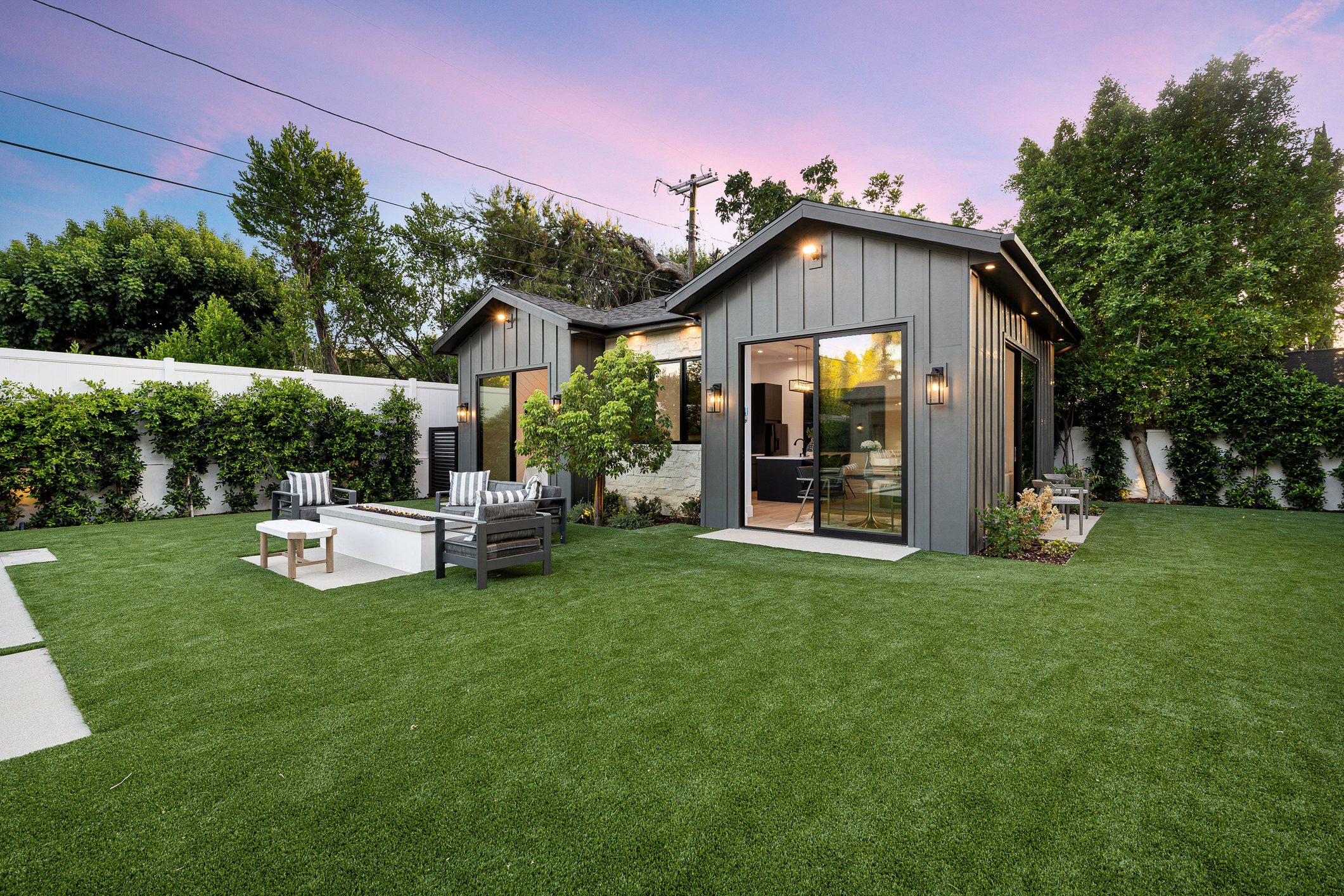
Drive through established neighborhoods in Modesto, Turlock, Stockton, or the unincorporated areas of Stanislaus County and the change is easy to miss at first glance. A new detached structure sits behind a ranch-style house. A garage has been converted. A junior unit occupies what used to be a large bedroom and bathroom. These accessory dwelling units, once rare and heavily restricted, are appearing with increasing frequency across the northern San Joaquin Valley. The shift is quiet, incremental, and largely driven by state rules that have steadily stripped away local barriers.
What began as a coastal phenomenon has taken root in the Valley’s single-family neighborhoods. The result is a form of gentle densification that adds housing without the political heat of large apartment projects or the farmland conversion debates that accompany greenfield development.
The Rules That Opened the Door
California has rewritten accessory dwelling unit law repeatedly since 2016. The cumulative effect is a statewide floor that local governments cannot undercut. Cities and counties must allow ADUs ministerially—without public hearings—on most residential lots. Setbacks are limited, parking requirements are restricted or eliminated in many cases, and size minimums are protected.
Further refinements took effect in 2026. SB 543 tightened the permitting clock: local agencies now have 15 business days to determine whether an application is complete and must approve or deny a complete application within 60 days. Miss the deadline and the application can be deemed approved. The same bill clarified that size is measured by interior livable space, expanded impact-fee exemptions for smaller units, and strengthened the state’s ability to invalidate non-compliant local ordinances. Other 2025 measures adjusted junior accessory dwelling unit rules and owner-occupancy requirements.
The practical outcome is that a homeowner who follows the objective standards has a clear path. The process is no longer an open-ended negotiation with planning staff or a gamble on neighborhood opposition.
What the Valley Is Seeing on the Ground
Local data show the shift. In 2025 Stanislaus County processed more than one hundred ADU permits, including both new detached construction and conversions of existing structures. A substantial share occurred in residential zones, but a notable number also appeared in agricultural zoning districts where second units have long been part of the rural landscape. Cities within the county have reported similar upward trends.
Stanislaus County and a group of partner cities—including Modesto, Turlock, Ceres, Hughson, Oakdale, Patterson, Riverbank, Newman, and Waterford—have gone further by offering free pre-approved plan sets. Homeowners can choose from designs of roughly 400, 750, and 1,200 square feet that have already been reviewed for building-code compliance. The plans reduce both cost and uncertainty. Stockton maintains its own set of pre-approved designs and provides clear online guidance for applicants.
These tools matter in a region where construction costs and permitting friction have historically discouraged small projects. When the plans are free and the approval path is ministerial, more owners move from consideration to application.
Who Is Building and Why
The motivations vary. Some homeowners create space for aging parents or adult children who cannot yet afford their own place. Others seek rental income to offset rising mortgage or property-tax costs. A growing number treat the ADU as a flexible asset—guest quarters now, potential rental later, or a way to age in place while generating income from the primary house.
In neighborhoods with larger lots, detached new construction is common. On smaller urban lots, garage conversions and junior units carved from existing floor area predominate. The architectural results are mixed. Some units match the primary house carefully. Others are more utilitarian. Over time the cumulative effect is a subtle increase in the number of front doors, mailboxes, and parked cars on streets that were designed for single-family occupancy.
Rental rates for these units remain lower than in coastal markets, which affects the financial calculus. Construction costs of $200 to $300 per square foot are still significant relative to local rents. Owners who build often do so for family reasons or long-term flexibility rather than pure cash-flow returns. Investors are present but less dominant than in higher-rent regions.
Neighborhood Change Without the Spotlight
Unlike large subdivisions or multi-story apartments, ADUs rarely trigger organized opposition campaigns. Each project is small. Most are invisible from the street. The densification happens one backyard at a time. Over five or ten years the character of a block can shift—more people, more vehicles, slightly higher demand on utilities and street parking—without a single headline-grabbing land-use fight.
This incremental pattern has advantages. It adds housing supply inside existing neighborhoods rather than pushing development outward onto farmland. It reuses infrastructure that is already in place. It allows property owners to capture some of the value of their land without selling. At the same time it raises quieter questions about cumulative impacts on water, sewer, schools, and the social fabric of blocks that were built for a different density.
Local governments are still adapting. Some have embraced the state rules and invested in pre-approved plans and clear handouts. Others are updating ordinances under pressure from the Department of Housing and Community Development, which now has stronger tools to void non-compliant local rules. The variation shows up in processing times and in the clarity of information available to applicants.
The Limits of the Boom
ADUs will not solve the Valley’s broader housing shortage by themselves. They work best on lots that already have adequate size, utilities, and access. They do little for households that do not own property. Construction financing remains a hurdle for many owners, and the shortage of small-scale contractors familiar with the latest code requirements can slow projects.
Water and sewer capacity, while rarely a hard stop for a single unit, become relevant when many units cluster in the same neighborhood. Parking, even when not required by code, remains a practical concern on narrow streets. These constraints do not reverse the trend, but they shape where and how densely ADUs appear.
A Quiet Redesign of Residential Life
The backyard home is no longer an exotic exception in the northern San Joaquin Valley. It is becoming a normal part of the residential inventory. State law removed most of the discretionary barriers. Local governments have begun to supply tools that make the path smoother. Homeowners are responding in numbers that would have been difficult to imagine a decade ago.
The change is visible mainly in the details: a new roof line behind an older house, a second electric meter, an extra trash cart on collection day. Multiplied across hundreds of lots, those details add up to a different kind of neighborhood—still low-rise, still largely single-family in appearance, yet housing more people than the original lot lines anticipated.
Whether that evolution eases pressure on the wider housing market or simply redistributes demand will depend on how many units are ultimately built and who occupies them. For now the most striking feature is the speed with which a once-obscure housing type has moved into the everyday landscape of Valley residential streets. The boom arrived without fanfare. Its effects will accumulate in plain sight for years to come.