Tag: Agriculture

  • Can the Valley Grow Food and Power at the Same Time?

    Can the Valley Grow Food and Power at the Same Time?

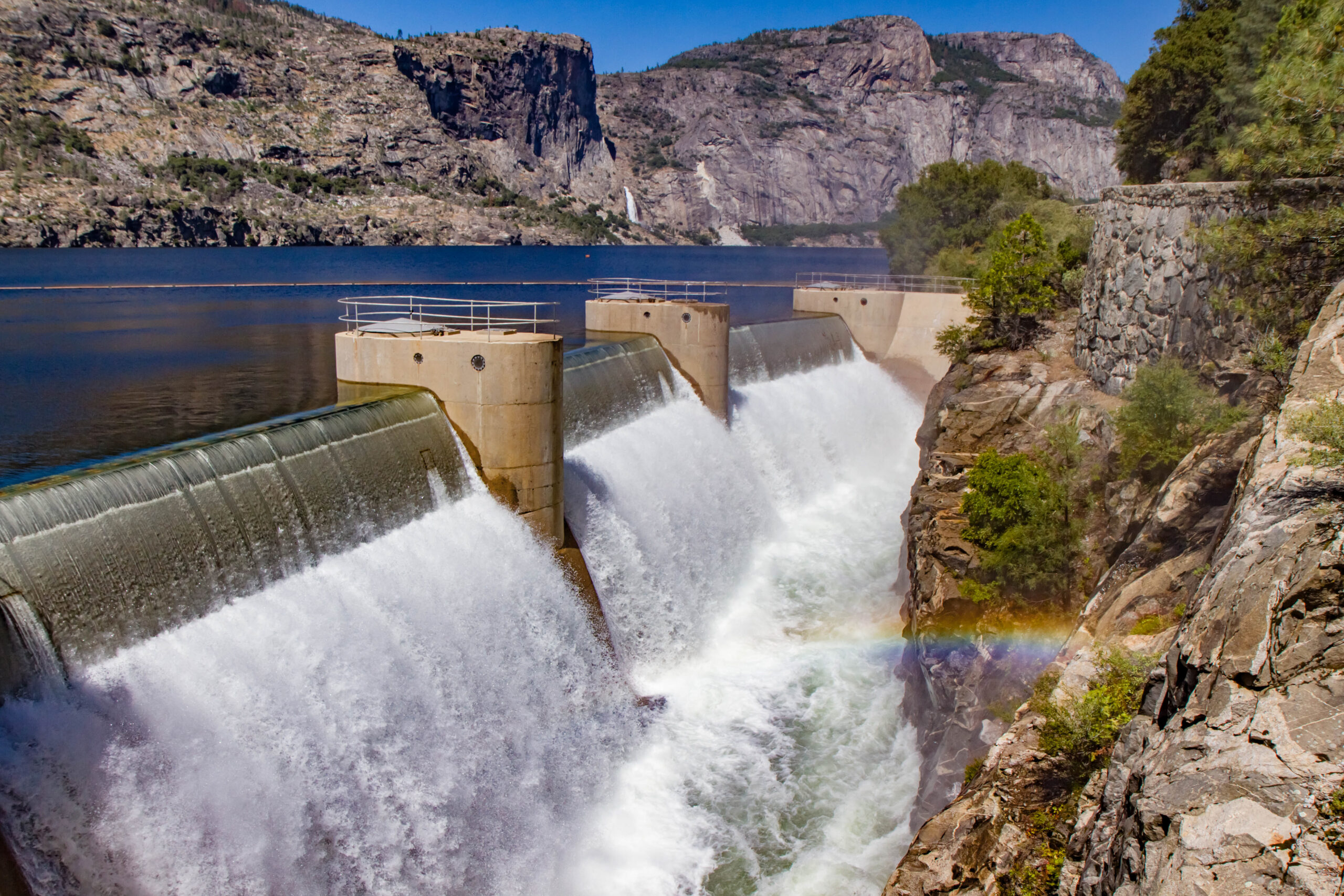
    Photo: Nikita Mistry / UC Davis, via UC Davis College of Engineering and Wikimedia Commons. Licensed under CC BY 2.0.

    THE HORIZON

    Agrivoltaics on the Horizon

    Solar panels could help some farms conserve water and diversify income. Making the idea work in the Central Valley will take careful choices about crops, costs and the future of agricultural land.

    California’s Central Valley has built an agricultural economy around abundant sunshine and the ability to move water where crops need it. Now that same sunshine is drawing interest for another harvest: electricity.

    The two uses can compete for land. Solar development offers a possible income source as groundwater constraints reshape farming, but replacing crops with panels raises questions about agricultural jobs, food production and the future of rural communities.

    Agrivoltaics proposes a different arrangement: design solar installations so crops or livestock remain part of the working landscape. The prospect is appealing. An acre might produce food and electricity while using less irrigation water. Whether it delivers those benefits, however, depends on what grows there, how the panels are arranged and whether the farming remains economically viable.

    For the Northern San Joaquin Valley, the useful question is becoming more specific than whether agriculture and solar can coexist. It is where they can coexist successfully—and who benefits when they do.

    One Acre, Two Uses

    Agrivoltaics involves agricultural production beneath or between solar panels. Elevated arrays can leave space for crops and equipment; vertical panels can stand between cultivated rows; grazing animals can use vegetation around conventional installations. These arrangements differ substantially in cost, management and agricultural output.

    That distinction matters when evaluating a proposed project. Sheep grazing beneath panels is agricultural production, but it does not preserve the same products, employment or supporting businesses as the irrigated crop operation it might replace. Likewise, putting solar on a farm does not automatically make it agrivoltaics. Panels occupying a separate field while agriculture continues elsewhere are not sharing the same productive acreage.

    The strongest case for dual use is that each activity can retain value without requiring its own full land footprint. But combined productivity should not obscure the individual results. A project can increase total revenue while reducing food output. Communities need to understand both outcomes.

    The Water Promise—and Its Limits

    A California suitability analysis by UC Berkeley researcher Sarah Sarfaty Epstein identifies more than 2 million acres of farmland with potential for agrivoltaics. Suitable areas cluster in 15 groundwater subbasins across the San Joaquin, Sacramento and Salinas valleys.

    According to the Berkeley Food Institute, the analysis estimates annual water savings of roughly 0.5 to 1.2 acre-feet per acre. Across the entire identified footprint, the estimates reach approximately 1.1 million to 2.5 million acre-feet annually.

    An acre-foot is enough water to cover an acre of land one foot deep—about 326,000 gallons. At the scale of the Valley, even modest savings per acre could become significant.

    Those estimates describe modeled possibilities, not water already conserved. The analysis identifies places worth investigating; it does not establish that every mapped parcel can support a financeable project or that all suitable acreage will be developed. Actual savings depend on crops, climate, array design and irrigation practices.

    The physical mechanism is plausible. Partial shade can lower daytime temperatures and reduce the atmosphere’s demand for water. Research at the University of Arizona found that shaded growing conditions altered soil moisture, plant water loss and crop performance. But responses differed among crops, underscoring why one irrigation-saving percentage cannot describe every farm.

    There is also an accounting question. More crop production per gallon is improved water-use efficiency; it is not necessarily less groundwater pumping overall. Groundwater agencies must also consider changes in irrigated acreage and water use elsewhere. If water saved on one field supports additional irrigated production on another, the aquifer may gain less than the original field’s results suggest.

    For local groundwater agencies, the relevant test is therefore measured, sustained improvement in the basin’s water budget.

    What Will Grow Under the Panels?

    Plants need sunlight, but more exposure does not always mean a better harvest. In very hot conditions, partial shade can ease stress. In other circumstances, reduced light can constrain growth.

    A University of Arizona study published in 2019 illustrates that variability. Researchers tested chiltepin peppers, jalapeños and cherry tomatoes beneath solar panels. Chiltepin and tomato production increased relative to the open plots, while jalapeños produced similar amounts with less water lost through transpiration. These were results from a particular experimental setting, not yield forecasts for California farms.

    California research is examining its own conditions. UC Davis described a one-acre experiment in 2024 involving peppers and tomatoes exposed to different combinations of light, irrigation and soil conditions. Treatments included partial shading from vertical solar panels, with fully sunlit, adequately irrigated plants providing a comparison.

    Such work helps move the discussion beyond whether plants can survive beneath panels. Growers need to know whether marketable yields, quality and harvest timing justify the investment.

    A trial showing healthy pepper plants cannot establish that a commercial almond orchard will work beneath the same structure. Permanent plantings require a design that accommodates mature canopies and years of management. Equipment access, pruning, spraying and harvest operations must fit around infrastructure that may remain for decades.

    Nor does success with a specialty vegetable automatically translate into an alternative for a large forage operation. Crop suitability is only part of the decision. Labor requirements, buyers, equipment and the farm’s existing business all matter.

    Design Starts With the Farm

    An agrivoltaic project is an exercise in sharing sunlight and space. Higher panels may improve access, while wider spacing can leave more room and light for agriculture. Those choices also change construction costs and electricity production per acre.

    The National Renewable Energy Laboratory identifies panel height, racking, equipment, installation labor and site preparation among the factors affecting project costs. Its research also emphasizes compatibility between agricultural operations and permanent energy infrastructure.

    For a grower, the practical questions begin at ground level. Can equipment turn at the end of a row? Can an irrigation line be repaired without disrupting electrical infrastructure? Will a future crop rotation remain possible? Who has access during harvest or equipment maintenance?

    These questions should shape the layout before construction. Retrofitting a farm operation around a completed array can leave agriculture with whatever space happens to remain.

    Grazing offers a different model and is an established part of American agrivoltaics. The U.S. Department of Energy has identified sheep grazing and pollinator habitat as prominent uses among documented projects. Growing commercial crops beneath arrays presents additional operational demands.

    A grazing project can be worthwhile on its own terms. Its benefits should be assessed according to what it actually produces and maintains, rather than treated as proof that every form of Valley agriculture can fit beneath panels.

    Two Revenue Streams, One Complicated Business

    Energy income can help diversify a farm’s finances, but the arrangement determines who receives that income and who assumes the risk.

    A landowner leasing acreage to a developer has a different business proposition from a grower borrowing money to own an installation. A tenant farmer may face another calculation entirely, especially if continued access depends on an agreement between the property owner and an energy company.

    The Department of Energy notes that agrivoltaic systems generally carry higher capital costs than conventional solar because structures, design and installation may be more complex. Worker safety, liability and business arrangements also require attention.

    Consequently, claims that electricity earns more per acre than crops are insufficient to establish a project’s value. A useful comparison must account for financing, agricultural revenue, operating expenses, maintenance responsibilities and the terms governing the land.

    Before signing, the parties need clear answers about crop damage, access, insurance and responsibility when equipment fails. They also need an end-of-project plan: who removes the infrastructure, who pays and what condition the soil must be left in.

    Solar installations can operate for 25 years or longer, according to the Department of Energy. That makes the agreement a long-term land-management decision as well as an energy investment.

    Why the Northern Valley Has a Stake

    Around Turlock, the future of groundwater is already shaping local planning. California’s Sustainable Groundwater Management Act, commonly called SGMA, requires local agencies in high- and medium-priority basins to plan for and achieve sustainable groundwater use. The California Department of Water Resources approved the revised Turlock Subbasin Groundwater Sustainability Plan on February 27, 2025, following an earlier determination that the plan was incomplete.

    Approval did not mean the groundwater problem was solved. The state’s determination called for continued monitoring and identified recommended corrective actions. It also set January 28, 2027, as the deadline for the agencies’ periodic evaluation.

    That distinction provides useful context for agrivoltaics. A promising technology becomes relevant to groundwater management when its results can be demonstrated and incorporated into an actual plan.

    For growers and officials in Stanislaus, Merced and San Joaquin counties, a sensible next step would be demonstrations tied to identifiable local needs. A trial should compare crop performance and water use against a credible conventional baseline while recording the costs of operating both systems.

    Those comparisons should include difficult years. A successful season provides information; several seasons reveal more about reliability, maintenance and changing weather.

    Regional planning also needs multiple options. Public Policy Institute of California research identifies solar development, groundwater recharge, habitat restoration and water-limited cropping among possible uses for land affected by declining irrigation supplies. Agrivoltaics deserves consideration within that wider set of choices. The best use of a particular parcel may depend as much on its location and water conditions as on the technology available.

    Protecting the Agricultural Promise

    Farmland protections add another layer. California’s Williamson Act enables agricultural land conservation through contracts, and the compatibility of solar development depends on local rules and the particular contract. State Department of Conservation guidance makes clear that local treatment of electrical facilities varies.

    A project’s agrivoltaic description therefore does not settle its land-use status. Growers and developers still need to establish which requirements apply to their property and proposed operation.

    For policymakers, there is a separate question: what should qualify as meaningful agricultural production when a project seeks recognition or support for dual use?

    A credible standard could require an agricultural management plan, reporting on production and water use, and a process for addressing prolonged abandonment of farming. Requirements should accommodate legitimate changes in crops and weather while making the original promise assessable.

    The distribution of benefits matters, too. Berkeley researchers studying agrivoltaics have explicitly raised questions about access for small and midsize farms and benefits for workers and surrounding communities. Those concerns belong in project evaluation from the beginning.

    A profitable lease for one property owner is one outcome. Maintaining viable farm businesses, useful employment and a healthier groundwater system are additional outcomes that require their own evidence.

    A Practical Test for the Valley

    Agrivoltaics has moved beyond an abstract idea. Research plots and operating projects demonstrate that solar generation can share land with agricultural activity. The remaining challenge is matching that possibility to the Valley’s crops, business conditions and water constraints.

    The strongest projects will make their tradeoffs visible. They will show how much food or forage remains in production, how much electricity reaches a useful market, what happens to water use and whether the combined operation can support its costs.

    For the Northern San Joaquin Valley, the opportunity is worth examining farm by farm. Some farms may find a durable second source of income. Others may discover that their crops, equipment or land are better suited to a different approach.

    The Valley can grow food and power together. The measure of success will be whether doing so helps sustain the farms and communities that depend on the land.

    Home » Agriculture

  • The Future of Water: Sustainability, Policy, and Innovation

    The Future of Water: Sustainability, Policy, and Innovation

    THE HORIZON

    Water will remain the single most decisive factor shaping the San Joaquin region’s economy, landscape, and communities through 2040 and beyond. The combination of the Sustainable Groundwater Management Act’s 2040 deadline, more variable weather patterns, continued population and economic growth, and aging infrastructure creates both serious risks and genuine openings for innovation. How the region manages this resource over the next fifteen years will largely determine whether it can sustain productive agriculture, support growing cities, and maintain the quality of life that residents expect.

    The challenge is no longer only about finding more supply. It is about using existing supplies more effectively, storing water when it is abundant, reducing demand where possible, and building institutions flexible enough to handle both drought and flood years.

    The 2040 Horizon: SGMA in Practice

    The Sustainable Groundwater Management Act, passed in 2014, requires critically overdrafted basins to reach sustainability by 2040. For many basins in the San Joaquin Valley, this means bringing long-term pumping into balance with recharge. Groundwater Sustainability Agencies have developed plans and are now in the implementation phase. Some districts have already begun requiring fallowing, crop shifts, or significant investments in recharge infrastructure.

    Early progress is visible in expanded recharge during wet years, better measurement of groundwater levels, and greater coordination among local agencies. Yet the hardest work still lies ahead. In average or dry years, the gap between historical pumping and sustainable yield remains substantial in several basins. The choices made in the next decade—about which lands stay in production, how much new recharge capacity is built, and how costs and benefits are shared—will shape the region’s agricultural footprint and economic base for a generation.

    Policy Realities Across Levels of Government

    Water decisions in the Valley continue to operate across three overlapping layers that do not always align.

    Federal operations of the Central Valley Project, combined with Endangered Species Act requirements and biological opinions, strongly influence how much water moves through the Delta and into the San Joaquin system. State policy sets water quality standards, flow requirements, and the overarching framework for groundwater sustainability. Local irrigation districts, cities, and Groundwater Sustainability Agencies make most of the day-to-day and year-to-year allocation decisions that growers and residents actually experience.

    This multi-layered system can slow decisive action, but it also allows for solutions tailored to local conditions that statewide rules alone could never provide. The most successful districts will be those that combine strong local leadership with the ability to navigate Sacramento and federal processes effectively. Policy debates over Delta conveyance, new storage, and the balance between agricultural, urban, and environmental uses will continue. The practical question for the Valley is how to secure reliable supplies and flexibility within whatever statewide framework emerges.

    Innovations Already Taking Root

    The region is responding with a mix of established practices and newer approaches.

    Managed aquifer recharge has moved from concept to active projects in many areas. Capturing high flows in wet years and directing them into groundwater basins through dedicated basins, agricultural fields, or modified channels is one of the most promising tools for rebuilding long-term storage. Some projects have already demonstrated the ability to store significant volumes when conditions allow.

    On-farm efficiency continues to improve. Advanced drip and micro-irrigation, soil moisture monitoring, and scheduling based on actual crop needs have become standard on many progressive operations. These practices deliver measurable water savings while protecting yields. Water trading and more flexible local markets allow supplies to move toward higher-value uses during shortages, improving overall economic efficiency even when total supply is constrained.

    Recycled water and, in limited cases, treatment of brackish groundwater are expanding for non-potable and some potable uses. Solar installations designed to coexist with canals or crops are beginning to link energy and water management in new ways. Data platforms that integrate weather forecasts, soil sensors, and allocation information are giving both districts and individual growers better tools for real-time decisions.

    None of these innovations is a complete solution on its own. Together they expand the region’s ability to live within tighter limits without sacrificing as much productive capacity as earlier projections sometimes assumed.

    A Realistic Outlook to 2040

    In a balanced scenario, the San Joaquin region achieves SGMA compliance through a combination of approaches: modest reductions in irrigated acreage (focused on lower-productivity or more water-intensive lands), significant gains in efficiency on remaining acres, expanded recharge and storage capacity, and stronger regional coordination on conveyance and trading.

    Agricultural output value could still grow overall because of higher productivity per acre and continued shifts toward higher-value crops and systems. Logistics, food processing, and related sectors would help absorb employment transitions. Cities would operate with clearer, more predictable supplies and greater use of recycled water.

    Challenges will persist. Multi-year droughts will still force difficult short-term decisions. Environmental flow requirements and Delta restrictions will remain points of tension. Climate patterns that produce more extreme swings between wet and dry years will demand infrastructure and institutions capable of capturing abundance and stretching scarcity.

    The difference between a difficult adjustment and a managed transition will depend on how much new recharge and storage capacity is built in the next ten years, how effectively local agencies coordinate, and whether state and federal policy supports rather than undermines local problem-solving.

    What Success Would Require

    Several conditions will largely determine the outcome.

    Accelerated investment in recharge infrastructure and conveyance that can move water to where it can be stored is essential. Continued support for on-farm innovation and the technical assistance that helps more growers adopt it will spread benefits more widely. Land-use planning that aligns new development with realistic water availability will prevent future imbalances. Workforce development that trains people to design, build, and operate modern water systems will ensure the region can implement its own solutions. Sustained civic engagement—through Groundwater Sustainability Agency boards, irrigation district elections, and public comment processes—will keep decisions grounded in local realities.

    Water management is not only a technical or regulatory challenge. It is also a test of institutional capacity and collective will. The same practical spirit that built the early irrigation districts can address today’s tighter constraints, but it will require faster innovation, broader coordination, and clearer long-term priorities than in the past.

    The Deeper Importance

    How the region handles water will influence nearly every other question about its future: the size and character of its agricultural economy, the cost of housing and development, the viability of new industries, and the quality of life in both cities and rural communities. A Valley that manages water with foresight and flexibility will retain more options. One that falls behind on infrastructure and coordination will face narrower and more painful choices.

    Residents, growers, business leaders, and elected officials who engage with these issues—attending local water meetings, supporting sensible infrastructure investments, and insisting on accountability from agencies—will help shape outcomes more directly than distant policy debates often acknowledge.

    The water challenges facing the San Joaquin region are real and lasting. So is the region’s capacity for practical adaptation. The decisions made in the next decade about storage, efficiency, recharge, and governance will determine not only how much water is available in 2040, but what kind of place the Valley becomes for the generations that follow. The resource that built the region’s prosperity remains the one that will most shape its next chapter.

  • Ag-Tech and the Future of Farming in California’s Interior

    Ag-Tech and the Future of Farming in California’s Interior

    THE HORIZON

    The orchards, vineyards, and fields of the San Joaquin region have always been shaped by a combination of soil, climate, water, and human ingenuity. From the first irrigation districts to the shift toward permanent crops, farming here has repeatedly adapted to new tools and new pressures. Today another wave of change is underway, driven by sensors, data, robotics, artificial intelligence, and biological innovations. Collectively known as ag-tech, these tools are moving from experimental trials into everyday use on more farms and ranches across the Valley.

    The stakes are high. Water constraints, labor availability, rising input costs, and the need to maintain productivity on finite land are pushing growers to do more with less. Ag-tech offers one of the most promising paths to higher efficiency, better resource use, and continued economic viability. How widely and effectively these tools are adopted will help determine what Valley farming looks like over the next two decades.

    The Current State of Adoption

    Precision agriculture has moved well beyond early adopters in many parts of the region. Growers are increasingly using soil moisture sensors, satellite and drone imagery, variable-rate application equipment, and data platforms that integrate weather, soil, and crop information. These tools help reduce unnecessary inputs—water, fertilizer, and crop protection products—while protecting or improving yields.

    Drones equipped with multispectral cameras now allow rapid field scouting, identifying irrigation problems, pest pressure, or nutrient deficiencies earlier than traditional methods. Autonomous or semi-autonomous equipment is appearing more frequently, particularly in larger operations and permanent crops such as almonds, pistachios, and grapes. AI-supported advisory systems combine real-time data with historical records to recommend timing for irrigation, spraying, or harvest.

    Adoption is uneven. Larger and better-capitalized operations have moved faster. Smaller family farms often face higher barriers related to cost, technical support, and connectivity. Still, the direction of travel is clear: data-driven and automated tools are becoming standard rather than exceptional in more segments of Valley agriculture.

    Key Technologies Reshaping the Fields

    Several categories of technology stand out for their potential impact.

    Precision irrigation and sensor networks form one of the most immediate and valuable applications. Real-time soil and plant sensors linked to automated valves can deliver water more accurately, reducing waste while maintaining crop health. In a region where water reliability is a constant concern, these systems offer both economic and practical benefits.

    Robotics and autonomy are advancing quickly. Ground robots for weeding, specialized harvesting aids, and self-guiding tractors reduce labor demand for repetitive tasks and improve timing. Early users report meaningful savings in labor costs and more consistent field operations, though the technology is still maturing for many specialty crops.

    Artificial intelligence and predictive analytics turn raw data into decisions. Machine learning models can forecast disease risk, optimize spray windows, estimate yields, and even support marketing decisions. When combined with drone or satellite imagery, these systems give growers a far more detailed view of their fields than was possible a decade ago.

    Biological products and improved genetics add another layer. Targeted biological controls, microbial soil amendments, and crop varieties bred for drought tolerance or nutrient efficiency are expanding the toolkit beyond traditional chemistry. These approaches can reduce environmental impact while supporting productivity.

    Data platforms that integrate information from equipment, sensors, weather stations, and farm records are becoming the connective tissue. The most useful systems help growers see patterns across seasons and make more confident decisions under uncertainty.

    Opportunities Specific to the Region

    The San Joaquin region has several advantages that favor ag-tech adoption and innovation.

    Scale and crop diversity create a rich testing ground. The variety of permanent and annual crops means that successful tools can find multiple markets. Existing irrigation infrastructure and a long culture of cooperative water management provide a foundation for shared data and coordinated technology use. Research institutions and extension services in the broader region support applied trials and knowledge transfer. Labor and resource pressures themselves act as catalysts: necessity is accelerating interest in tools that reduce dependency on scarce inputs.

    If adoption continues and deepens, the Valley could maintain or even increase the economic value of its agricultural output even if total irrigated acreage moderates under long-term water limits. Higher productivity per acre, better quality, and more efficient use of water and labor would support both farm incomes and the broader regional economy that depends on agriculture.

    Workforce and Community Implications

    Ag-tech will not eliminate the need for skilled people. It will change the nature of many jobs. Future roles are more likely to involve operating and maintaining robotic equipment, interpreting data dashboards, managing sensor networks, and troubleshooting complex irrigation systems. These positions generally require more technical training and can command higher wages than traditional field labor.

    This shift creates both opportunity and risk. Workers who gain the new skills can move into more stable and better-paid positions. Those without access to training may find fewer entry-level opportunities. The region’s education and workforce systems will play a decisive role in determining who benefits. Partnerships between community colleges, high school career programs, equipment dealers, and growers can create clearer pathways into these emerging technical roles.

    Smaller farms face particular challenges. The capital cost of many advanced systems and the need for reliable technical support can be harder to manage at smaller scale. Cooperative purchasing, shared equipment models, and simplified technology packages will be important if the benefits of ag-tech are to reach beyond the largest operations.

    Challenges on the Road Ahead

    Several barriers still slow widespread adoption. Upfront costs remain significant for many tools. Rural broadband gaps limit the performance of cloud-based systems in some areas. Data ownership, privacy, and interoperability between different platforms create uncertainty. The learning curve for multi-generational farm families can be steep, especially when new systems require different ways of making decisions. There is also the risk of over-reliance on technology that can fail during extreme weather or system outages.

    Regulatory questions around autonomous equipment, drone operations, and new biological products add another layer of complexity. Clearer standards and practical support for compliance would help more growers move forward with confidence.

    A Vision for Valley Farming in the 2030s

    By the early 2030s, a successful trajectory would see sensors and analytics guiding irrigation and input decisions on a much larger share of acres. Robots and automated equipment would handle more repetitive tasks, freeing human workers for higher-skill roles. Drones and satellites would provide continuous monitoring. Traceability systems would allow buyers and consumers to see more about how and where food was produced. Some operations would generate part of their own energy through solar installations designed to coexist with crops or canal infrastructure.

    In this future, the San Joaquin region would continue to produce high-value crops for domestic and export markets, but with greater efficiency and resilience. Agriculture would remain a foundational economic and cultural force, supported by a growing layer of technical services, equipment innovation, and data-driven management. The Valley would be known not only for what it grows, but for how intelligently it grows it.

    The Human Element Endures

    Technology changes tools and methods. It does not replace the core strengths that have always defined farming in this region: detailed knowledge of land and microclimates, practical problem-solving, willingness to adapt, and the multi-generational commitment that keeps many operations going through difficult years.

    The most successful path forward will combine new tools with those enduring strengths. Growers, researchers, equipment providers, educators, and policymakers who work to make ag-tech accessible, practical, and profitable for a wide range of operations will help write the next chapter of Valley agriculture. The fields will still need skilled people who understand both the land and the technology. The future of farming here will be shaped by how well those two forms of knowledge are brought together.

  • California’s Next Frontier: How the Central Valley Can Lead the State’s Economic Future

    California’s Next Frontier: How the Central Valley Can Lead the State’s Economic Future

    THE HORIZON

    For decades, the story of California’s economy has been told from the coast outward. Silicon Valley, Hollywood, the ports of Los Angeles and the Bay Area — these places have defined the state’s image of innovation, wealth, and global influence. The Central Valley, by contrast, has often been cast as the reliable but secondary engine: the place that grows the food, provides the labor, and absorbs the housing overflow from more expensive coastal metros.

    That narrative is incomplete. And it is beginning to change.

    The San Joaquin region possesses a rare combination of scale, location, productivity, and adaptive capacity that positions it not merely to participate in California’s next economic chapter, but to help lead it. The question is no longer whether the Valley will grow. It is whether the region will seize the opportunity to become a more complete, higher-value, and more self-determined economic force — one that strengthens the entire state rather than remaining in its shadow.

    What follows is not a prediction of inevitable success. It is an examination of the structural advantages the region already holds, the pathways that could turn those advantages into leadership, the realistic vision of what that leadership could look like by the mid-2030s, and the hard requirements that must still be met.

    The Structural Advantages No One Can Ignore

    Several durable realities favor the Valley in ways that are difficult for other regions to replicate.

    Geographic centrality is the most obvious. The Highway 99 and Interstate 5 corridors sit near the midpoint of California’s major population centers. This is not a minor convenience; it is a structural advantage for logistics, distribution, and manufacturing that coastal locations increasingly lack due to congestion, land scarcity, and cost. Goods moving between Northern and Southern California, or between California and the broader western United States, naturally pass through or near the Valley. As companies seek more resilient domestic supply chains, this location becomes more valuable, not less.

    Land and cost structure remain comparatively favorable. Relative to the coast, the Valley still offers available land at prices that allow businesses to expand, experiment, and scale without the extreme capital requirements of Bay Area or Southern California sites. In an era when firms are reevaluating the total cost of doing business — including housing for workers, permitting timelines, and operational flexibility — this difference matters. It does not mean the Valley is inexpensive in absolute terms, but the relative advantage is real and persistent.

    Agricultural depth and know-how form another foundational asset. The region remains one of the most productive agricultural landscapes on Earth, responsible for a disproportionate share of the nation’s fruits, nuts, vegetables, and dairy. That expertise — in water management, crop systems, food processing, soil science, and increasingly precision technology — is a platform for higher-value innovation rather than a limitation. Few places combine this depth of practical knowledge with the scale needed to test and deploy new systems at meaningful volume.

    Demographic energy adds further potential. A younger, growing population provides both workforce and entrepreneurial capacity. The challenge has long been retaining that talent rather than exporting it to coastal job markets. Regions that successfully keep more of their ambitious young people tend to compound advantages over time. The Valley has the raw demographic material; converting it into sustained local capacity remains one of its highest-leverage opportunities.

    These are not temporary trends driven by a single policy cycle or market boom. They are structural features that become more valuable as coastal costs continue to rise, global supply chains reconfigure, and the demand for reliable domestic production grows.

    A Leadership Model Built on the Valley’s Own Strengths

    Leadership does not require the Valley to become a second Silicon Valley or a replica of coastal innovation hubs. Attempting to copy those models would likely fail and would miss the region’s distinctive advantages. True leadership requires the Valley to do what it has always done well — produce, adapt, and build — at a higher level of sophistication and with broader impact.

    Four interlocking pathways stand out as the most realistic routes to that outcome.

    First is advanced food systems and agricultural innovation. The Valley can move from being primarily a supplier of raw commodities to a center of precision agriculture, sustainable intensification, and food-system technology. Sensors, robotics, data analytics, variable-rate application, and improved genetics are already changing practices on progressive farms and orchards. The region’s scale makes it an ideal testing and deployment ground for these tools. Success would raise productivity per acre even under tighter water constraints, create higher-skill technical jobs tied directly to the land, and position the Valley as a source of solutions rather than only products. The knowledge developed here — in managing water under scarcity, integrating technology into complex permanent-crop systems, and maintaining output under regulatory pressure — has value far beyond California’s borders.

    Second is inland logistics and advanced distribution. As e-commerce volumes grow and companies pursue nearshoring strategies, the Valley’s location and land availability make it a natural inland hub. Expanded capacity at Stockton’s port, stronger intermodal rail connections, and modern fulfillment and cold-storage facilities can turn the 99 and I-5 corridors into one of California’s primary distribution backbones. This is not limited to low-skill warehouse work. It includes cold-chain logistics for perishable goods, packaging innovation, inventory optimization, and supply-chain coordination that support both agriculture and broader manufacturing. Regions that successfully capture these functions tend to generate significant secondary employment and tax base growth.

    Third is practical energy and resource solutions. Abundant solar potential, existing canal networks, and agricultural land create opportunities for agrivoltaics (solar installations that coexist with farming), bioenergy from agricultural residues, and more efficient water management systems. Expertise developed under the Sustainable Groundwater Management Act and through long-standing local irrigation districts can become exportable knowledge. The Valley’s multi-decade experience with water scarcity and infrastructure gives it credibility on solutions that other arid and semi-arid regions will eventually need. Turning that experience into practical models — rather than simply enduring the constraints — is a form of leadership.

    Fourth is stronger talent and education pathways. A more effective local pipeline — from high school career-technical programs through community colleges and regional universities into well-paying technical and professional roles — would reduce the brain drain that has long limited the region’s potential. Partnerships that align education with the actual needs of ag-tech, logistics, healthcare, advanced manufacturing, and skilled trades would keep more ambition and capacity close to home. Regions that succeed at this tend to create virtuous cycles: better local opportunities attract and retain talent, which in turn supports higher-value economic activity.

    Together, these pathways form a model of balanced growth: rooted in production, elevated by technology, oriented toward resilience, and capable of generating broader prosperity rather than concentrating gains in a narrow set of industries or locations.

    What Leadership Would Look Like by the Mid-2030s

    In a successful scenario, the San Joaquin region would look noticeably different by the middle of the next decade — not unrecognizable, but more dynamic and more self-sustaining.

    It would generate a larger share of California’s total economic output relative to its population. Logistics, advanced agriculture, food processing, and related technical services would form a more substantial and higher-wage share of the regional economy. Agricultural output value could still grow even if total irrigated acreage moderated, driven by productivity gains and continued shifts toward higher-value crops and systems.

    The region would lead the state in certain categories of job creation — particularly in logistics, precision agriculture support, and technical roles tied to food systems and distribution. Downtowns in places like Modesto, Stockton, and Turlock would show more signs of revitalization and mixed-use activity. Local universities and colleges would be known regionally, and in some specialties nationally, for programs connected to the Valley’s economic strengths.

    More of the region’s own talent would stay. Young people would see clearer pathways to solid careers without needing to leave for the coast. Employers would find it easier to recruit and retain skilled workers locally. The Valley would begin exporting practical solutions — in water management under scarcity, food-system technology, and inland logistics models — rather than primarily exporting raw commodities and surplus labor.

    This version of leadership would benefit the entire state. It would relieve some pressure on coastal housing markets and infrastructure. It would strengthen California’s food security and supply-chain resilience. And it would demonstrate that the state’s economic future need not be confined to a narrow coastal band of high-cost, high-congestion metro areas.

    The Hard Requirements

    None of this is automatic or guaranteed. The region faces real and persistent constraints that must be managed deliberately.

    Water reliability remains the most fundamental. The long-term effects of the Sustainable Groundwater Management Act, combined with more variable precipitation patterns, will force difficult choices about land use, crop selection, and infrastructure investment. Regions that treat water as a strategic asset to be managed with both efficiency and foresight will be better positioned than those that treat it primarily as a constraint to be endured.

    Housing affordability can undercut the Valley’s cost advantage if prices continue to rise faster than local wages. Without adequate production of attainable housing near job centers, the region risks importing the same cost-of-living pressures that have limited coastal growth.

    Infrastructure must keep pace with expansion. Roads, water systems, broadband, and public services that lag behind growth degrade quality of life and eventually limit economic potential. Coordinated investment is essential.

    Education and workforce systems still leave too many young people without clear local pathways into higher-skill roles. Closing that gap requires sustained partnership between schools, colleges, employers, and civic institutions rather than isolated programs.

    Political fragmentation sometimes prioritizes short-term or narrowly local interests over regional strategy. Leadership at the scale described here requires a greater degree of cross-county cooperation and longer time horizons than has often been the norm.

    Progress depends on deliberate choices: coordinated planning across jurisdictional lines, balanced land-use policies that protect the most productive farmland while allowing smart expansion in appropriate locations, sustained investment in training and infrastructure, and civic leadership that treats the Valley’s long-term competitive position as a strategic priority rather than an afterthought.

    The Deeper Stakes

    The Central Valley has rewritten its own story before. It turned arid plains into one of the world’s most productive agricultural regions through collective engineering, institutional innovation, and determination. It absorbed successive waves of people seeking opportunity — from early settlers and Gold Rush migrants to Dust Bowl refugees, immigrant farm families, and more recent arrivals — and built towns, irrigation districts, colleges, and communities that still shape daily life. The next chapter is not about abandoning that history. It is about extending it into a new economic context.

    A Valley that leads would still grow food. It would also generate more of the technology, logistics capacity, resource-management expertise, and practical innovation that a changing California and a more uncertain world will need. It would offer a model of growth that is productive rather than purely speculative, grounded rather than purely coastal, and oriented toward resilience rather than extraction.

    California’s economic story has room for more than one center of gravity. The concentration of high-value activity along the coast has produced extraordinary wealth and innovation, but it has also produced extreme costs, congestion, and geographic imbalance. A stronger Valley would help correct that imbalance without diminishing the coast’s strengths.

    The San Joaquin region has the scale, the location, the productive base, and the adaptive history to claim a larger share of California’s economic future. Whether it does so depends less on distant policymakers in Sacramento or Washington than on the decisions made in boardrooms, classrooms, city halls, irrigation district offices, and farm fields across the Valley in the years immediately ahead.

    The opportunity is real. The structural advantages are already present. The question is whether the region will organize itself to claim the leadership role that those advantages make possible.

    The next decade will largely answer that question.
  • From Dust to Distribution: The Early Foundations of the Valley Economy

    From Dust to Distribution: The Early Foundations of the Valley Economy

    ROOTS & DUST

    The modern Valley economy can look, at first glance, like a simple extension of agriculture. Fields produce. Trucks haul. Warehouses store. Processing plants sort, pack, cool, and ship. Goods move outward in every direction.

    The logic seems straightforward: the Valley grows food, and the rest of the system supports that fact.

    But that is only part of the story.

    The Valley did not become economically important merely because it could grow things. It became important because it learned how to turn production into movement, and movement into structure. Its early economy evolved in stages — from grain fields and river transport to rail shipment, processing, storage, trucking, and distribution.

    What began as a landscape of dust, weather risk, and seasonal opportunity gradually became an organized system capable not only of producing at scale, but of sorting, storing, processing, and moving goods efficiently to distant markets.

    That transition matters because it explains one of the deepest truths about the Valley: this was never only a place of cultivation.

    It became a place of throughput.

    Its power has always depended not just on what the land could yield, but on what the region could do with that yield once it was harvested.

    Before the System Thickened

    In the decades after the Gold Rush, much of the Valley floor was still a place of broad possibility rather than fully developed organization. The land was rich, but the systems needed to stabilize and scale production were still thin.

    Wheat and barley dominated large portions of the early agricultural landscape. The Valley’s flat terrain, deep alluvial soils, and winter rainfall made dryland grain farming profitable for a time. Its sheer size encouraged large operations. Bonanza ranches spread across the plains, and early mechanized harvesting gave producers an advantage in efficiency.

    For a while, the formula worked.

    But this first phase of Valley capitalism was powerful and narrow. It depended heavily on a limited crop base, favorable weather, and the ability to move grain outward at a profit.

    Towns grew around that activity. Milling expanded. Trade routes thickened. Stockton became an important milling and export center, turning local harvests into flour and shipping them toward broader markets. But for all the apparent scale of the system, its fragility remained.

    Repeated cropping wore on the soil. Drought exposed the limits of rainfall-based farming. Floods could erase gains made in better years. Competition from other grain regions compressed prices. Large operations could look impressive on the landscape and still prove unstable over time.

    The wheat era established an early productive order. But it did not yet create the durable, layered regional economy that would follow.

    The Valley could produce wealth from grain. It had not yet built a more resilient system around diversified movement.

    Dust, Labor, and Precarity

    The early twentieth century brought another transition, shaped not only by crops and markets but by people under pressure.

    The Dust Bowl years of the 1930s sent large numbers of migrants westward from Oklahoma, Texas, Arkansas, and elsewhere. Many were fleeing ecological ruin, farm collapse, and economic desperation. In California they were often flattened into the single label “Okies,” regardless of where they actually came from.

    Many arrived in the Valley because agricultural work could still be found here.

    Their arrival changed the region. Towns across Stanislaus, San Joaquin, and Merced counties grew under the pressure of migration. Labor camps, makeshift settlements, crowded temporary housing, and social tension became part of the landscape. The new arrivals provided a workforce essential to a more labor-intensive agricultural order, especially as irrigation and crop diversification increased demand for hands in the field, in packing sheds, and during harvest.

    The cost was high.

    Many migrants lived in deep precarity. Wages were low. Housing was poor. Local services were strained. Established residents did not always welcome them, and employers often benefited from the desperation of a workforce with few alternatives.

    Yet the broader consequence was unmistakable: the Valley became even more deeply tied to recurring labor migration as part of its economic model.

    That pattern has never fully disappeared.

    The region did not move from dust to distribution through infrastructure alone. It moved there through workers as well — often poorly compensated, often unsettled, but indispensable.

    From Raw Output to Economic Layering

    What ultimately made the Valley economy stronger was not only that it began growing different things. It was that it began doing more after those things were grown.

    As irrigation stabilized agriculture and farmers shifted toward higher-value crops — fruits, nuts, vegetables, cotton, feed, and dairy-supporting systems — the economic logic changed. These crops required more than land and water. They required handling, timing, sorting, preserving, cooling, packaging, processing, and fast shipment.

    That is when the economy began to thicken.

    Canneries, packing houses, dryers, mills, cold storage facilities, and warehouses appeared near rail lines and growing towns. Crops no longer moved outward only as raw bulk commodities. Increasingly, they passed through stages of cleaning, sorting, cooling, packaging, and processing before reaching wider markets.

    Value was being layered onto production.

    This was one of the decisive developments in the making of the Valley. A region that grows things is one kind of place. A region that grows, processes, stores, and ships them efficiently becomes something larger. It becomes infrastructural. It becomes harder to replace. It becomes economically dense.

    That was the beginning of the Valley’s transition from agricultural landscape into production-and-distribution system.

    Stockton played a major role in this evolution. Its shipping channels, milling, rail connections, and later port facilities made it especially valuable as a place where production could be converted into movement. But the same logic spread across the region. Communities that connected farms to processors, processors to transport, and transport to outside markets gained economic weight.

    Those that could not often receded.

    Transportation as Destiny

    If agriculture was the foundation, transportation was the multiplier.

    Early reliance on rivers gradually gave way to the reach and regularity of railroads. Rail changed the scale of what was possible. It tied the Valley more closely to ports, cities, and national markets. It reduced isolation. It made large-scale coordinated production more plausible. Grain, fruit, livestock products, and processed foods could move outward more predictably, while machinery, tools, fuel, and outside goods flowed inward.

    But the transportation story did not stop with rail.

    As roads improved and trucking became more common, flexibility increased. Perishable goods no longer depended entirely on fixed rail systems. Trucks could connect farms to packing houses, packing houses to cold storage, and cold storage to urban markets with far greater adaptability.

    Highway development later deepened this pattern and helped make the Valley not just a growing region, but a movement region.

    This is why the modern Valley feels inseparable from corridors, spurs, loading docks, freight yards, industrial parks, and warehouse districts. Its economy has long depended on moving volume. A crop harvested here gains full economic meaning only when it can be transferred reliably into wider channels of exchange.

    Rail spurs mattered. Deep-water access mattered. Cold storage mattered. Highway access mattered. Trucking firms mattered.

    The Valley’s economic rise was never just about soil or climate. It was also about timing, transfer, and the physical means of connecting one landscape to distant consumers.

    Transportation was not just support infrastructure.

    It was destiny.

    The Making of a Distribution Economy

    By the mid-twentieth century, the Valley had begun developing the early form of what would later become a full distribution economy.

    Warehouses made seasonal surpluses manageable. Cold storage extended the life of perishable goods. Processing plants made agricultural output more portable and valuable. Rail and truck networks linked farms to cities and export points. Towns became less important as isolated service centers and more important as nodes inside a larger system of movement.

    This marked a subtle but important shift.

    The Valley was no longer only producing large quantities of goods. It was becoming specialized in moving large quantities of goods outward with growing efficiency.

    That distinction laid the groundwork for the logistics corridors, warehouse concentrations, trucking patterns, and agribusiness clusters that define much of the region today.

    The early economy, then, was never just about crops. It was about conversion.

    Dusty fields became grain regions. Grain regions became irrigated production zones. Production zones became processing and storage systems. Those systems became the foundation of a distribution-oriented regional economy.

    The Valley learned not only how to grow.

    It learned how to circulate.

    What Endured

    Several strengths established in those early phases still shape the region now.

    One is scale. The Valley learned early how to work across large acreage and large volumes. That habit remains central to its economic identity.

    Another is specialization. Distinct crop districts, concentrated processing, and infrastructure aligned to certain forms of production created powerful efficiencies.

    A third is adaptability. The region repeatedly shifted in response to market pressure, environmental strain, labor realities, and technological change. It moved from grain to diversified crops, from local handling to large-scale processing, from rail dependence to multimodal freight systems.

    A fourth is migration-linked labor. The Valley has long drawn people seeking opportunity, survival, or a second chance. That has given it a dynamic workforce, but also a history marked by inequality and recurring tension.

    And finally, there is distribution orientation. The Valley learned early that prosperity depended not just on production, but on reliable outward movement. Modern logistics corridors and warehouse landscapes are not alien intrusions. They are the latest form of a much older regional logic.

    Why This Story Matters

    The early foundations of the Valley economy matter because they show that the region was never just a passive agricultural zone. It was built into an economic corridor by repeated acts of organization.

    The Valley moved from dust-choked grain fields and fragile early settlement toward something more durable because it learned how to layer value onto production and move that value outward.

    That required fields, certainly. But it also required mills, depots, labor camps, packing houses, ports, roads, warehouses, and freight systems. It required institutions and habits of movement.

    This is why the modern Valley cannot be understood only through the image of the farm.

    The farm remains essential, but it is only the beginning of the chain. The Valley became indispensable because it built the systems that came after harvest.

    In the quiet hum of a warehouse at night, in the steady movement of trucks north and south, and in the industrial edges of old farm towns now serving national food and freight systems, one can still see the result of those early transformations.

    The Valley learned to move beyond the vulnerability of dust, weather, and raw output alone.

    It became a place that could organize production into flow.

    That is what built the early foundations of the Valley economy.

  • The Immigrant Roots of the Valley: Waves of Newcomers Who Built the Region

    The Immigrant Roots of the Valley: Waves of Newcomers Who Built the Region

    ROOTS & DUST

    The Central Valley is a place built by movement.

    From the Sierra foothills to the flatlands along Highway 99, nearly every acre of productive farmland, every processing facility, and every thriving town carries the imprint of people who arrived from somewhere else. Successive waves of immigrants and migrants — each bringing distinct skills, cultures, and determination — helped transform a semi-arid basin into one of the most productive agricultural regions on Earth.

    Their stories are not separate side chapters. Together, they form one of the deepest foundations of the Valley’s strength.

    The region’s prosperity did not emerge from land alone. It was built through labor, family sacrifice, adaptation, and the willingness of newcomers to invest their lives in a place that was often demanding, uncertain, and still taking shape. The Valley was not only settled by newcomers. It was repeatedly renewed by them.

    Some came seeking wealth. Some came seeking work. Some came fleeing violence, poverty, persecution, ecological disaster, or exclusion. Some arrived with agricultural knowledge; others acquired it here. Some entered through landownership, others through labor, tenancy, dairying, orchard work, trucking, trade, or small business.

    The pattern is clear: the Valley grew stronger by absorbing newcomers and turning their labor, knowledge, and persistence into local permanence.

    The First Waves: Gold, Settlement, and Reinvention

    The foundation was laid during and after the Gold Rush.

    The discovery at Sutter’s Mill in 1848 triggered one of the most intense migrations in American history. Miners, merchants, laborers, mule skinners, blacksmiths, gamblers, and teamsters came from across the United States, Mexico, Europe, China, and beyond. The foothills became a place of compressed diversity, rough ambition, improvisation, and relentless competition.

    Not everyone stayed in the mines. Many did not.

    Some failed to find enough gold. Some made money and looked for safer investments. Some grew tired of camp instability. Others found opportunity supplying miners rather than digging beside them. As easy placer gold declined, many moved downslope into the Valley.

    They brought more than population. They brought habits.

    They had learned ditch building, flume construction, water diversion, transport, trade, and quick decision-making under harsh conditions. Those skills mattered in a region that would later depend on managed water, practical engineering, and local organization.

    At the same time, Mexican and Mexican-American communities, rooted in the rancho era and the older world before American annexation, provided continuity through this transition. They carried forward labor traditions, local knowledge, family lines, and cultural memory as the region changed.

    From the beginning, the Valley was not built by one people. It was built by layered arrival.

    Armenian Pioneers and the Rebuilding of Life

    One of the most powerful immigrant stories in the Valley is the Armenian settlement around Turlock and Stanislaus County.

    In the wake of the Armenian Genocide of 1915–1923, survivors arrived seeking safety and a chance to rebuild. Their migration was not merely economic. It was bound up with catastrophe. Families had been shattered. Homes had been lost. Entire worlds had been destroyed.

    Many did not arrive with wealth. They began as farm laborers, packing house workers, or hired hands. But Armenian families brought agricultural knowledge, strong family cooperation, thrift, and a long-term outlook suited to the Valley’s emerging orchard and vineyard economy.

    Through pooled labor and careful land stewardship, many saved enough to purchase modest acreage. They planted grapes, melons, apricots, peaches, almonds, and other higher-value crops. Smaller family operations, carefully managed across generations, could produce impressive results on land others had not always viewed as especially promising.

    Their influence reached beyond farming. Holy Cross Armenian Apostolic Church became a cultural and spiritual anchor, preserving faith, memory, tradition, and community life while helping families establish permanent roots in California.

    The Armenian story remains one of the Valley’s most remarkable examples of renewal: survivors of mass violence helping build one of the state’s most productive farm communities.

    Portuguese Families and the Rise of Dairy

    Portuguese immigrants, especially from the Azores, began arriving in significant numbers in the late nineteenth and early twentieth centuries. Many gravitated toward Stanislaus, Merced, and San Joaquin counties, where they found opportunity in one of the Valley’s most demanding but stabilizing industries: dairy.

    Like many immigrant groups, Portuguese families often began with limited means. Some worked first as laborers, milkers, or tenant operators before gradually building herds and acquiring land. What set them apart was the way they adapted family-centered labor and close animal management into a durable model of dairy enterprise.

    Dairy required constancy. Unlike seasonal crop systems, it did not run on one harvest. Cows had to be fed, milked, bred, and managed every day. Facilities had to be maintained. Feed had to be secured. Production demanded discipline and routine.

    Portuguese-American families proved especially strong in that world. Their long hours, close supervision, and multi-generational approach helped build operations that were efficient, resilient, and deeply rooted.

    Over time, Portuguese families helped turn dairy into one of the region’s cornerstone industries. Dairying supported feed suppliers, veterinarians, equipment dealers, milk processors, truckers, and workers. It gave the agricultural economy more year-round stability.

    Their cultural influence also endured through churches, Holy Ghost festas, fraternal organizations, and strong family traditions. Many descendants remained in dairy; others moved into business, education, law, and civic leadership.

    Their legacy is now woven into both the economy and social fabric of the Valley.

    Dust Bowl Migrants and the Working-Class Valley

    The Dust Bowl migrants of the 1930s were domestic migrants, not immigrants in the formal sense. But they belong in this larger story because they fit the same regional pattern: people displaced elsewhere helping strengthen the Valley through work, persistence, and settlement.

    Hundreds of thousands left Oklahoma, Arkansas, Texas, Kansas, Missouri, and nearby states after drought, ecological collapse, debt, and foreclosure destroyed rural livelihoods. Labeled “Okies” whether or not they were actually from Oklahoma, many arrived in California carrying little more than necessity.

    The San Joaquin Valley offered work. Cotton, grapes, peaches, and other labor-intensive crops required seasonal labor at the very moment these families were desperate for survival.

    The early years were harsh. Families lived in camps, tents, cars, or makeshift housing. They worked long hours for low wages and were often unwelcome. Their poverty was visible, and their arrival strained local communities.

    Yet many stayed.

    Over time, some moved from seasonal labor into more stable farm work, trades, small business, and homeownership. Their children and grandchildren became part of the Valley’s postwar workforce and civic life. They also left a cultural imprint: country music traditions, evangelical Protestant faith, plain-spoken social values, and an emphasis on self-reliance.

    What began as emergency migration slowly became rooted settlement.

    Latino Communities and the Sustaining Labor Force

    No group has been more central to the daily labor system of modern Valley agriculture than Latino workers and families, especially those of Mexican heritage and later those arriving from Central America.

    Their presence reaches back to the rancho period and continues through the Bracero Program and later migration. Across generations, Latino workers planted, thinned, harvested, packed, sorted, loaded, processed, and transported the crops that made the region famous.

    The scale of modern Valley agriculture would not exist in its current form without their sustained labor.

    That truth should be stated plainly. Much of what the Valley is known for rests on work performed by Latino families over generations.

    Yet their role did not stop at labor.

    Many families moved from seasonal work into permanent settlement, homeownership, entrepreneurship, and leadership. Small businesses, trucking operations, contracting firms, service companies, and eventually farm ownership and public leadership became part of the larger story.

    Their cultural impact is visible everywhere: churches, schools, food traditions, community celebrations, bilingual public life, music, neighborhood identity, and local politics. Latino families have not only sustained the fields. They have helped shape the towns, neighborhoods, and institutions around them.

    Their story is one of work, settlement, and belonging on a scale so large that it now defines much of the region’s human character.

    A Wider Mosaic

    No single group built the Valley alone.

    Swedish settlers brought dairy and crop knowledge to important communities. Italian families contributed to orchards, vineyards, and small-scale agricultural enterprise. Japanese immigrants brought specialized horticultural skill and land stewardship before wartime internment disrupted their farms and lives; many later returned and rebuilt.

    Hmong and other Southeast Asian refugees brought new crops, intensive cultivation practices, and entrepreneurial energy in later decades. Assyrian, German, Filipino, Indian, and many other communities added their own skills, traditions, labor, and institutions to the region’s life.

    Each group entered under different conditions. Some came with more resources, some with far less. Some faced severe prejudice, exclusion, or legal barriers. Some found opportunity through land purchase, others through wage labor, tenancy, or small business.

    Together, they created a regional pattern impossible to ignore: the Valley is one of California’s great layered societies, built not through uniformity but through repeated incorporation.

    What They Shared

    Across these waves, several patterns emerge.

    One is family and community labor. New arrivals survived difficult starting conditions by pooling effort, sharing risk, and building across generations.

    Another is adaptation. They learned the Valley’s climate, soils, crops, water systems, and markets, then applied specialized knowledge in ways that increased productivity.

    A third is long-term investment. These communities did not simply fill labor gaps and move on. They bought land when they could, built institutions, educated children, and turned temporary footholds into permanent presence.

    A fourth is cultural preservation alongside integration. Churches, festivals, language, food, music, and mutual aid networks allowed communities to remain themselves while becoming deeply local.

    These groups did not merely keep the economy running. They made the Valley more productive, more durable, and more socially complete.

    A Shared Legacy

    The Valley’s strength has always come from its capacity for renewal.

    Each new wave of newcomers arrived under pressure — fleeing violence, poverty, exclusion, ecological disaster, or lack of opportunity. Many found that life here was far from easy. Yet they stayed, adapted, and built.

    The orchards, dairies, schools, churches, neighborhoods, and businesses that now line the Valley floor are not simply the result of natural fertility or infrastructure. They are the accumulated result of people who arrived under difficult conditions and rooted themselves deeply enough to alter the future of the place.

    That history matters now because the Valley is again changing. Housing pressure, water constraints, labor shifts, and economic transition are testing the region’s ability to adapt. Its own past offers a practical lesson: the Valley has been strongest when people had room to build, settle, organize, and pass something forward.

    Without newcomers, there is no recognizably modern Valley.

    There is no Turlock as it now exists without Armenian families. No dairy order in its familiar form without Portuguese enterprise. No stable twentieth-century agricultural labor force without Dust Bowl and Latino settlement. No full social and economic texture without the many other communities whose names do not always dominate public history but whose work remains built into the place.

    The region’s strength did not come from isolation. It came from repeated incorporation.

    Look across the orchards, dairies, churches, neighborhoods, packing houses, commercial corridors, and distribution centers now, and the point becomes clear. What appears to be one region is, in truth, the layered result of many peoples binding themselves to the same demanding ground.

    That is not a side note in the history of the Valley.

    It is the main line.

  • How Agriculture Became the Backbone of the Central Valley

    How Agriculture Became the Backbone of the Central Valley

    ROOTS & DUST

    To understand the Central Valley, it is not enough to say that agriculture is important. That is too small a claim. Agriculture is not merely one industry among many here. It is the system that shaped the settlement of the land, the growth of towns, the rhythm of labor, the rise of infrastructure, and the practical identity of the region itself.

    It is the backbone.

    That word matters because a backbone does more than support one function. It supports the whole body. In the same way, agriculture has long done more than generate revenue in the Valley. It has organized land values, family life, water systems, town growth, processing networks, transportation routes, and the everyday culture of work.

    This did not happen all at once. Nor was it inevitable.

    The Valley possessed remarkable agricultural potential, but potential alone does not build a regional order. What made agriculture dominant here was the long convergence of land, markets, migration, irrigation, adaptation, and institutional persistence. The story is not simply that farming arrived and succeeded. It is that the Valley became agricultural in stages, until farming stopped being just a use of land and became the structure of the place.

    Before the Valley Became an Agricultural System

    Long before commercial farming, the land that would become the Turlock-Modesto-Stockton corridor and the wider San Joaquin Valley was already inhabited, understood, and managed. Indigenous peoples, including Yokuts and Miwok communities, lived within a landscape of seasonal abundance. They harvested seeds, acorns, fish, game, and other resources while shaping the land through knowledge of water, movement, and fire.

    This was a productive environment, but not yet an agricultural economy in the later Valley sense. It was a managed ecological world, not a permanently intensified one.

    The Spanish and Mexican periods brought a different model: the rancho. After secularization in the 1830s, large cattle-based landholdings spread into parts of the Valley. These estates were suited to grazing, hides, and tallow, not the diversified cultivation that would later define the region. The land produced value, but it was still lightly developed.

    The Valley had not yet become what it would later be: a place where production, settlement, transport, and infrastructure all revolved around farming.

    That shift began with wheat.

    The Wheat Age

    The first great agricultural economy of the Valley was grain.

    The Gold Rush created immediate demand for food, and the Valley’s broad alluvial plains proved well suited to winter wheat. The crop fit the climate well enough to support major production under dryland conditions. Large fields could be planted and harvested efficiently, and as markets expanded, wheat gave the region its first coherent agricultural identity.

    In counties like Stanislaus and San Joaquin, large-scale grain production became the organizing principle of the countryside. Bonanza ranches spread across thousands of acres. Machinery was adapted to fit the Valley’s flatness. Grain moved outward toward ports and urban markets. For a time, it appeared that wheat had given the Valley its economic purpose.

    But wheat, important as it was, did not yet make agriculture the backbone in the deeper sense.

    It made the land productive. It did not yet make the region fully developed.

    The wheat economy had structural weaknesses. It relied on large acreage, was vulnerable to drought and price swings, and created less social and economic density than the diversified farming system that would follow. Wheat could enrich landowners and produce exports, but it did not generate the same intensity of settlement, processing, family farming, or local business networks.

    By the 1890s, the grain model was showing strain. Monocropping stressed soils. Global competition compressed prices. Dry years exposed the limits of farming that depended too heavily on rainfall.

    The Valley had not failed. It had reached the limit of its first agricultural model.

    Irrigation Changes the Valley

    The true breakthrough was not simply that farming continued. It was that farming changed form.

    Organized irrigation made that possible. Once reliable water could be delivered at scale, the Valley no longer had to depend primarily on broad, weather-exposed grain systems. It could move toward higher-value, more intensive, more permanent forms of agriculture.

    This was the decisive shift.

    Irrigation did not merely increase production. It changed the kind of economy the land could support. Permanent crops such as almonds, peaches, grapes, apricots, and walnuts required long-term confidence. So did dairying, poultry operations, irrigated pasture, alfalfa, and diversified horticulture. These systems encouraged smaller farms, heavier investment, more stable family operations, and a denser relationship between countryside and town.

    The Valley did not just grow more crops. It grew a social world around those crops.

    A wheat ranch could dominate a landscape without producing much civic life around it. An irrigated farming region could support families, schools, churches, merchants, packing houses, processors, feed suppliers, equipment dealers, veterinarians, bankers, and transport companies.

    That is when agriculture became more than production.

    It became the organizing system.

    Family Farms and a New Social Order

    One of the most important results of irrigation was the rise of smaller farming units in places where large grain holdings had once dominated. Parcels that might once have been absorbed into enormous wheat operations became viable as 20-acre, 40-acre, or otherwise modestly scaled farms under intensive cultivation.

    This mattered economically, but it also mattered socially.

    Smaller irrigated farms attracted immigrants and settlers willing to work intensely, often with family labor and specialized knowledge. Armenians, Portuguese, Swedes, Japanese, and others helped reshape the productive landscape through horticulture, dairying, and diversified cultivation. Their arrival did not merely add labor. It changed the region’s productive intelligence.

    This is why the Valley’s agricultural history cannot be separated from its migration history. The region became powerful not simply because water arrived, but because people arrived who knew how to turn water, land, and labor into a more sophisticated economy.

    These families did more than grow crops. They built communities. They established churches, schools, associations, language networks, businesses, and intergenerational landholding patterns. Agriculture became not just an occupation, but a framework for belonging.

    That is why the farming history of places like Turlock and Modesto is never only about acreage and yields. It is also about settlement, family succession, ethnic communities, and the creation of a regional culture grounded in work, land, and practical optimism.

    Agriculture Becomes the Wider Economy

    Once agriculture diversified and intensified, its role changed permanently.

    It stopped being simply a primary sector and became the center of a much wider economy.

    Fields required irrigation systems. Orchards required processors. Dairies required feed, refrigeration, transport, maintenance, and veterinary support. Packing houses required labor, management, financing, and distribution networks. A productive countryside created dependent towns, and those towns created the services, institutions, and built environment that allowed the countryside to remain productive.

    This multiplier effect is one of the clearest reasons agriculture became the backbone rather than merely a leading industry.

    In the Valley, farming has always had unusually strong secondary effects. It supports truck traffic, rail movement, warehouse development, food processing, equipment sales, legal services, accounting, banking, cold storage, export logistics, and local retail. Even sectors that appear separate from agriculture often owe part of their existence to its long regional dominance.

    This is especially visible in the Turlock-Modesto-Stockton corridor, where agricultural production fed not only farm income but broader systems of processing, transport, and urban growth. Roads, utilities, small manufacturers, and service economies all developed in relationship to the demands of a productive agricultural base.

    That is what makes the word backbone so precise.

    Agriculture is not simply large here. It is structurally generative.

    Why Agriculture Won

    The Valley could have evolved differently. It might have remained more thinly settled ranchland. It might have depended on a narrower range of crops. It might have become more marginal, less stable, or more dominated by extraction than cultivation.

    But agriculture won because it fit the region’s strengths once the major limitations were addressed.

    The Valley offered broad flat land, fertile alluvial soils, long growing seasons, and room for scale. Once water systems, storage systems, and transport networks matured, agriculture became the most powerful use of those advantages. It could generate wealth continuously and diversely. It could scale from family plots to major enterprises. It could adapt to markets more readily than rigid monocropping could. And it could support not just production, but a wider civic economy.

    Agriculture also won because it proved flexible. The Valley was never tied forever to one crop. It moved from grazing to wheat, from wheat to orchards and diversified horticulture, from field crops to dairy concentration, from bulk production to more technologically sophisticated systems. The specific forms changed, but the agricultural character of the region deepened.

    The backbone endured because it could bend.

    The Backbone Today

    Even as the Valley diversifies into logistics, education, healthcare, and other sectors, agriculture still exerts a defining influence over daily life.

    It remains visible in the landscape, in the seasonal calendar, in labor demand, in land-use debates, in water politics, and in the relation between town and countryside. It explains why many communities still feel like service centers for productive farmland even as they grow into more complex urban places. It explains why debates over housing, groundwater, air quality, freight, and transportation so often circle back to farming.

    Agriculture may not be the only story anymore, but it is still the foundational one.

    That foundation now faces real pressure: groundwater limits, SGMA compliance, climate variability, labor shortages, input costs, land competition, and changing global markets. Yet the Valley is responding in the way it often has: through adaptation. Precision irrigation, data-driven crop management, ag-tech investment, recharge projects, solar integration, and new production models all represent attempts to revise the agricultural order rather than abandon it.

    That, too, is part of the backbone story.

    What has endured is not one fixed mode of farming, but a persistent regional commitment to keeping farming viable.

    Why This History Matters

    The story of agriculture in the Central Valley is not simply the story of crops. It is the story of how a region found its organizing principle.

    Agriculture became the backbone because it linked land, labor, water, transport, settlement, and civic life more powerfully than any other force in the Valley’s history. It created wealth, but also towns. It shaped markets, but also families. It altered land use, but also identity.

    From wheat to orchards, from irrigated family farms to dairies, from packing sheds to logistics corridors, the backbone has changed form many times. But it has remained the central support structure of the region.

    That is still visible today.

    Look across the Valley and what you see is not just abundance. You see a long achievement: land made usable, work made productive, and a regional society built around the discipline of making a difficult place yield.

    That is how agriculture became the backbone of the Central Valley.